
Diving with Friends | Finding Hidden Horrors
10 horror fans share 10 hidden delights

Good day fellow ghosts and ghouls!
At the start of the year I did a post where I threatened and extorted a bunch of my friends into doing my job and writing about stuff they liked, and…well, it was awesome, so I’m doing it again.
But in honor of summer—the peak spooky horror season in Japan (always gotta be on brand)—this time I’ve bribed folks into talking about nothing but Japanese horror. That’s right, today we’ve got ten of my friends who all frankly know way more about the subject than me all coming together to recommend YOU some good, good Japanese horror you might have missed. Some of them are silly, some of them are weird, some of them are terrifying, and most all of them surprising in one way or another. It’s hard to imagine you’ll leave this without at least one new favorite waiting to be discovered.
Remember: after reading, go follow my pals! Everyone featured here is both extremely cool AND extremely knowledgeable, and your life will be measurably better if you keep up with them and the things they do.
Alright, enough of me blabbing. Let’s get into it!
cayce crane
Paranormal Master Tape 2 (dir. Kotaro Terauchi, 2020)
I would like to talk about Paranormal Master Tape 2.
But to do that, we need to talk about the first Paranormal Master Tape. This is a four-episode miniseries of 25-minute episodes that easily work as one feature, directed by Kotaro Terauchi of Fake Documentary Q fame. The conceit is deliciously inside-baseball for fans of the found footage / mockumentary format: "let's get the most famous real-world directors of the psychic documentary genre – a genre we acknowledge is populated by fabrications – and have them team up to investigate the 'real' first-ever Japanese psychic documentary, which has been lost to time." Wouldn't you know it, said footage and the search for it produces eerie manifestations and curses that amplify the personalities of and friction between these directors and their assistants, until a dramatic supernatural conclusion inevitably occurs. Even without being familiar with any of the other directors besides Terauchi (who stars as well as directs), the whole thing is a lot of fun, if not particularly scary.
As good a time as it is, though, the second one clears it by a mile. First of all, Paranormal Master Tape 2 starts by immediately going "oh yep, that was all fiction! But whoa look at this weird tape we got sent, should we investigate it for real, just like the fake series we just did...?" which is just an amazing escalation of setup. The weird footage that's uncovered throughout is much stronger as well, focusing on the classic "a photo that kills you??" and it's really enjoyable to see these characters apply their hard-won lessons as psychic documentary directors, investigating and uncovering the underlying mystery. Like the first PMT, Terauchi and company utilize the larger psychic documentary community as well, pulling in real life cursed footage/haunted location/horror youtube channels like ZoZoZo to lend verisimilitude to the proceedings.
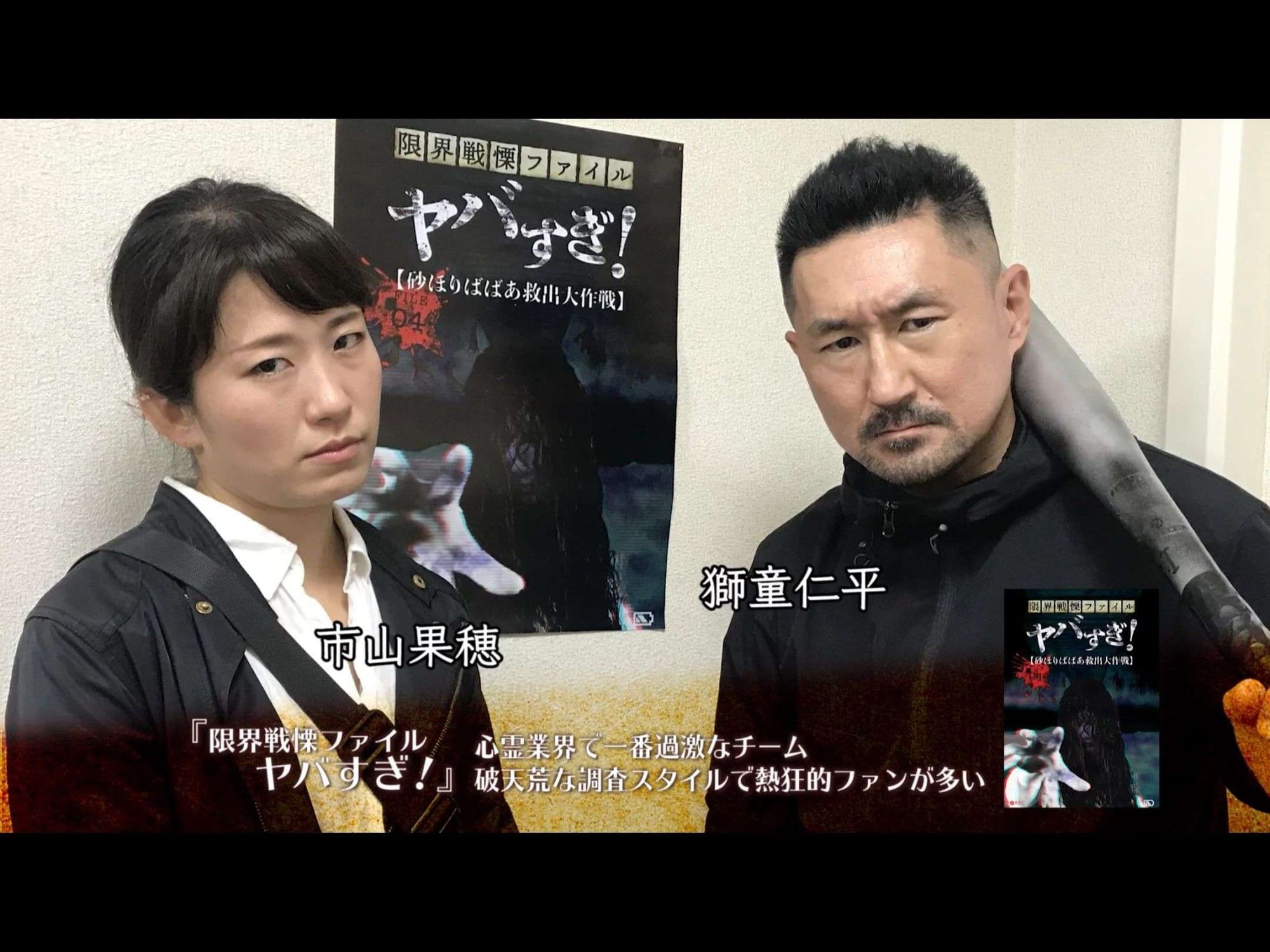
But I'll be honest: I've buried the lede a bit here, because what brought this series to my attention initially wasn't just the prospect of a fun and extra-meta horror mockumentary. While scouring the internet for more crumbs of Koji Shiraishi's all-time-great movie series Senritsu Kaiki File Kowasugi!, I had learned that stars Shigeo Ôsako and Chika Kuboyama appear in PMT2, seemingly as their Kowasugi! characters. And as anyone who's seen even a few entries in the Kowasugi! series can attest, any opportunity to see more Director Kudo and Ichikawa is one to be seized. Sure enough, Ôsako and Kuboyama are here, appearing first at the end of part one and then rather significantly in the following parts. But they're not playing Kudo and Ichikawa - they're playing Nipei Shido and Kaho Ichiyama from "Limited Horror File, the Most Radical Team in the Psychic Industry: Too Dangerous!", even more heightened (and aggressive) parodies of Kudo and Ichikawa that coincidentally are investigating the same cursed photo. The results of this are absolutely as funny as a Kowasugi! fan would hope and take the whole thing to a really fantastic level.
I'm not going to try to sell Paranomal Master Tape 2 as high art or anything. But it is a damn good time if you're invested in the genre, and if you're a Kowasugi! fan, you simply really do have to check it out.
cayce crane's website | Bluesky
Mara
Urban Legend Story Hikiko (dir. Kaisei Kishi, 2008)
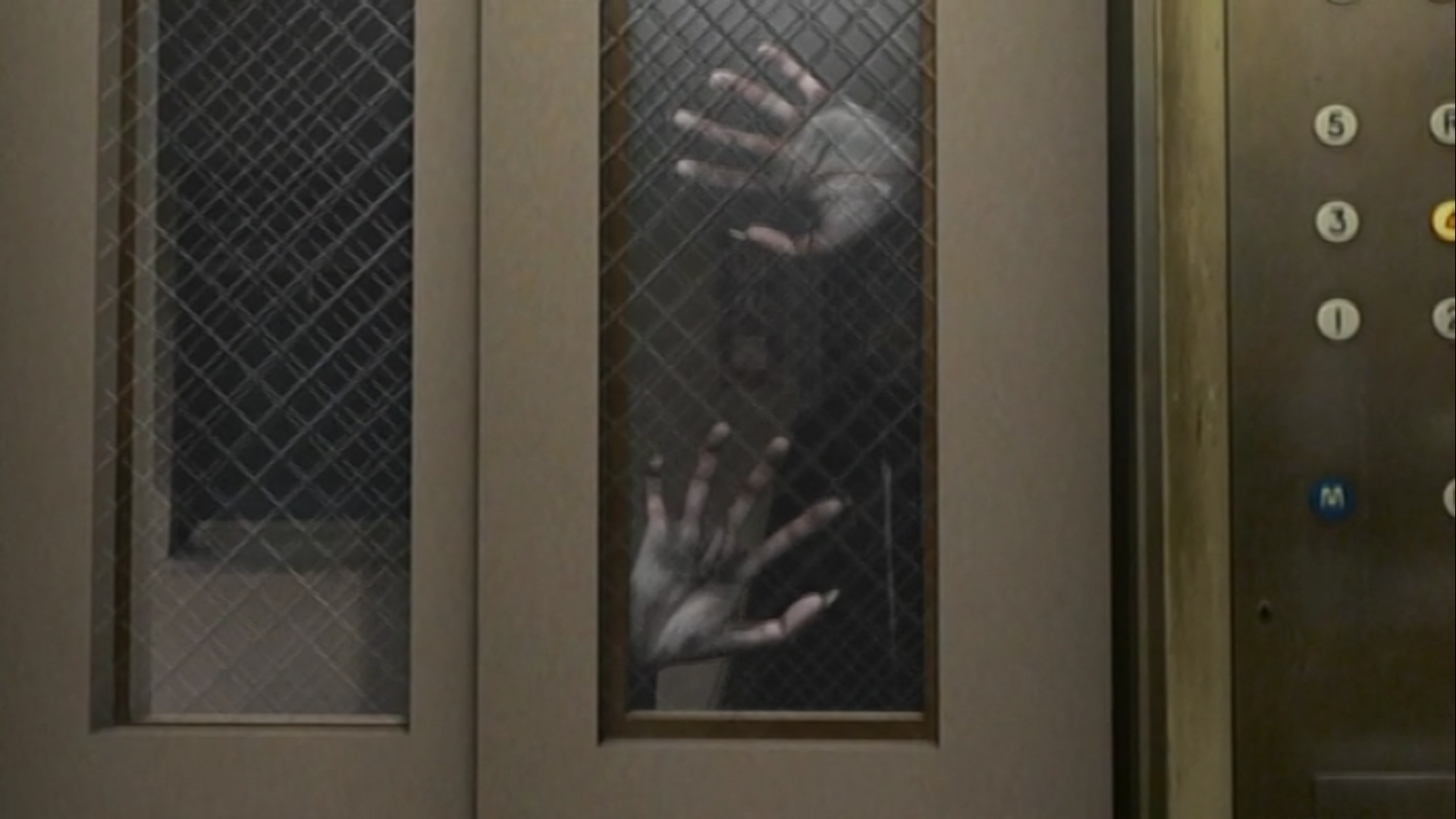
There's this strange phenomenon I've experienced throughout my whole life that has been feverishly attached to Japanese Horror as a concept almost purely by accident; that of a nauseating feeling of déjà vu, of the unseen meticulously forming in your head as a sort of spectral after-effect, the cloudy remnants of an image you've seen prior, unsure of where it could've come from but definitely haunting you from that point forward. You see, it was an incredibly popular thing in the mid 2000s (and still kinda is to this day) to upload completely contextless, often times nameless clips of j-horror movies to sites like Youtube or even message boards. "Scariest 怨霊 Moments Compilation Part 15 (NOT CLICKBAIT)" type videos, which honestly in retrospect kinda owns massively. That relative sensation of anonymity, of watching something completely disjointed from its original incarnation or context felt incredibly addictive to me as a terminally online kid. To understand that this thing, horrifying as it is, would taunt me over and over, and to never be able to have a distinctive name to put on it felt genuinely exhilarating! With years of searching or often times just a better ability to do so, I've found myself being able to pinpoint a couple of films I've "seen" in that fashion. Koji Shiraishi's Ura Horror and its psychic bent of a spoon matching a neck being snapped, or games like Forbidden Siren and its folkloric approach to a surrealistic alien landscape of unfamiliar familiarity. But one I've been hopelessly searching for, all these years, and was only able to rewatch very recently was Urban Legend Story Hikiko.
The movie's premise is incredibly simple, pulled back almost exclusively to its rawest elements and asks you only but a simple question. What would happen if you saw something you shouldn't have? A woman, a strange creature, a flickering shadow in the mist taking someone's life, dragging it to some place where it'll never be seen again. What if that thing, whatever it may be, saw you. What if it knew your neighborhood, your school, even the place you live like the back of its hand? What if it followed you on your way there? The walls of your own paranoia are slowly closing in, the latch on the door may be shut but who knows how long? Realistically speaking, this is a story you've probably heard hundreds of times if not more. You could describe that exact same premise to anyone, in hopes of maybe finding where you heard of it and could get even more answers without ever reaching a sense of clarity or a name. After all, it's practically a cliché when it comes to horror and its endless list of codified tropes. But in its presentation of arcane puppetry, of souls who've been digitized into uncanny movements, it create this weird attachment to it in my heart. What Urban Legend Hikiko lacks in originality, it makes up fully in style, and after all in this world style is substance. Its specific brand of awkward transitional CGI from the era feels nearly synonymous with early internet temptations, jump scares and other "gotcha" moments akin to the Bongcheon-Dong Ghost. There's something almost nostalgic to that sort of vibe, prototypical models now able to be softly rendered in motion, yet still unable to truly ascertain a feeling that one could quantify as fully "human". I think this adds up a lot to the feeling I was describing earlier, a sort of empathetic "knowing". Its position as something "so familiar that you could've seen it anywhere" while still retaining that feeling of staring at something genuinely alien. It's a sensation I've always been looking for but now more than ever. Curiosity driving you into a corner, never finding the time to look back, not wanting to by fear of seeing something you shouldn't, couldn't have. In that sense, I feel like that film has truly become the exact kind of cultural artifact truly fitting to be passed by only by the hushed tones and dark whispers of internet netizens. Give it a peep sometimes, you'll never know what kind of horror will stick to the back of your mind.
Mara's YouTube channel | Patreon | Bluesky
Jenny
X-Cross (dir. Kenta Fukasatsu, 2007)
My first introduction to J-horror was as a highschooler in the early 2000s. Gore Verbinski’s The Ring had just hit the local video rental store and all my friends were talking about how it was the scariest movie they had ever seen. I had to see it. I begged my mom to let me rent it and I was so excited when I came home from school one day to find she had loaned it from the library. I popped it in the VCR and immediately knew something was off, but I couldn’t tear my eyes away from Hideo Nakata’s 1998 adaptation of the Koji Suzuki novel. This was the beginning of a lifelong obsession with Japanese horror movies, ranging from long haired ghosts to full on splatter. Unfortunately, in the 2000s these movies were very hard to come by. If you were really lucky you might find a Tartan Asia Extreme DVD in that store in the mall that sold bootleg t-shirts and bongs, but for the most part you had to scrounge the internet for niche blogs with built in Flash media players or pray for a 360p Youtube upload that you had to let buffer for twice as long as the movies runtime.
The movie I want to recommend today is the perfect time capsule of Y2K Japanese horror. It combines the insanity and splatter of movies like Machine Girl and Tokyo Gore Police, with the cute bedazzled tech of the era, and a little dose of having to dig through the still new and mysterious world wide web for the information you’re looking for.
X-cross follows two best friends, Shiyori and Aiko, who are taking a girls trip to the hot springs of Ashikari Village so that Shiyori can distract herself from a rough breakup from her first real boyfriend. While Shiyori is lamenting about love lost, Aiko reveals that she is not the type to fall in love or get too close to anyone, preferring to have casual relationships. Wondering if this might also apply to friendships, Shiyori begins to doubt how close the two really are. Before they can discuss where they stand as friends, a scythe wielding cult attacks and they are separated from each other. For the rest of the movie, most communication is done through blinged out y2k flip phones, complete with cute keychains. With missed connections and much miscommunication, will they ever settle their differences and uncover the mystery of Ashikari Village?
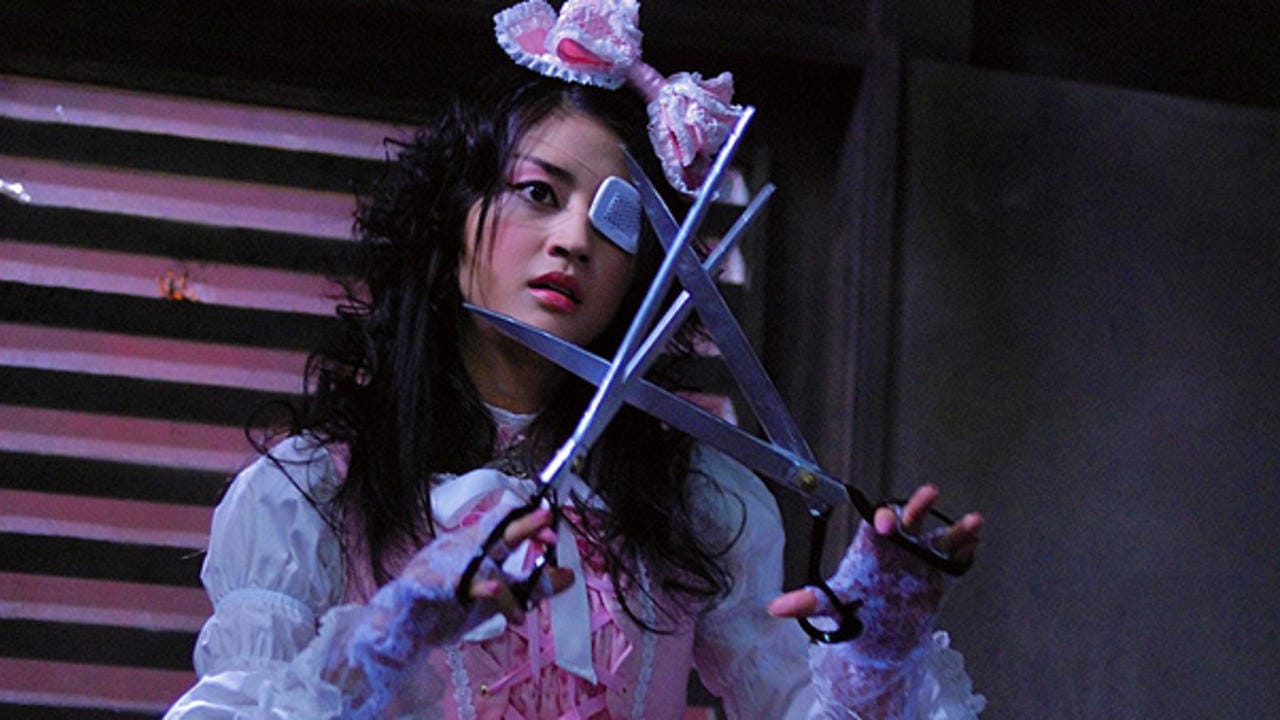
Oh,hold on, I forgot to mention, there’s a crazed Lolita clad maniac wielding a giant pair of scissors who is stalking Aiko with the intent to kill?? Yeah, honestly, that’s all you need to know. There are multiple large scale action sequences that include chainsaws, explosions, a creepy Silent Hill 2 bathroom, and a giant pair of scissors to really drive home how much this movie feels like a Playstation 2 survival horror game. If you’re looking to disconnect from social media, forget the stress of 2026 and indulge in some 2000s nostalgia, go check out X-cross!
Jenny's Instragram | Bluesky
Orrin Grey
Snake Girl and the Silver-Haired Witch (1968, dir. Noriaki Yuasa)
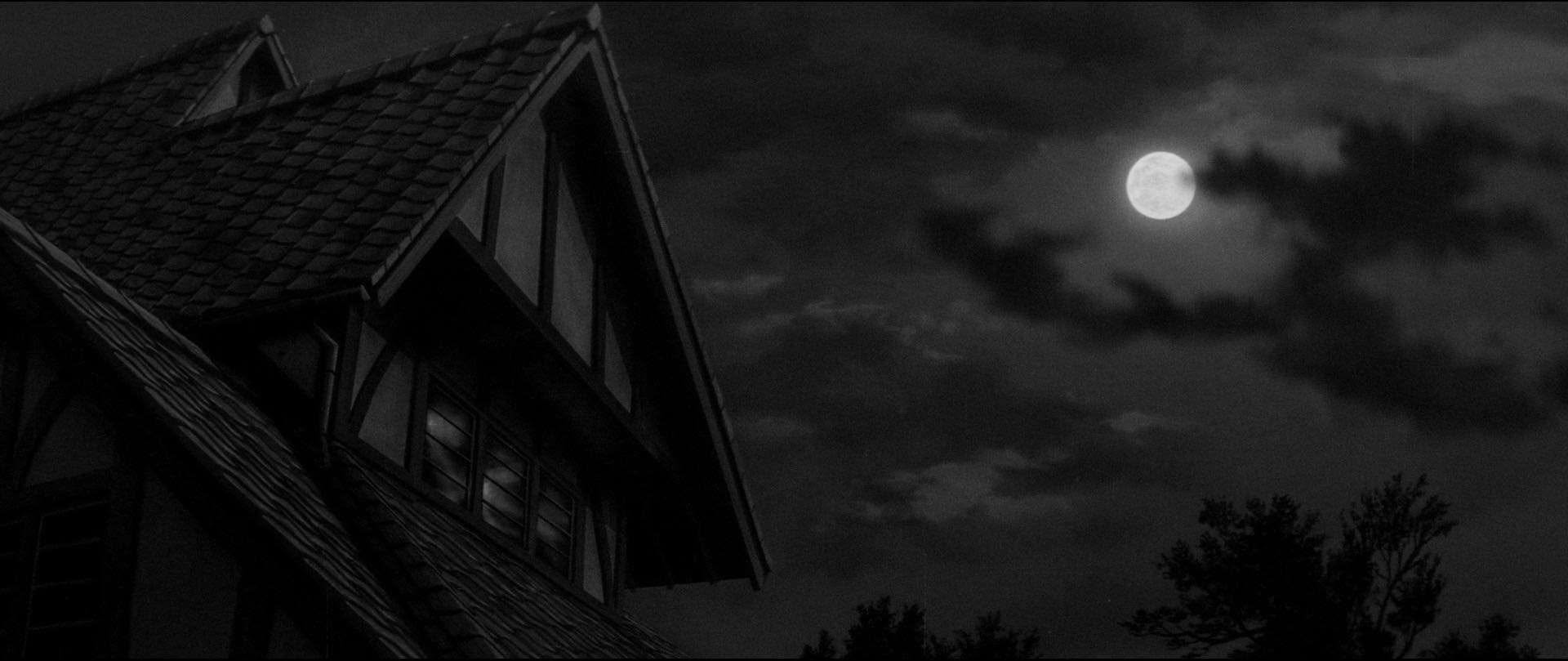
Between the third and fourth Gamera pictures, director Noriaki Yuasa paused to make a movie just for me – never mind that I wasn’t born yet, and wouldn’t be for more than a decade.
As a break in a popular kaiju series to tell a more traditional spooky story, Snake Girl and the Silver-Haired Witch can be seen as of a piece with another of my favorite Japanese horror flicks: Ishiro Honda’s Matango. Where that film took its plot from a seminal weird tale by British author William Hope Hodgson, however, Snake Girl reaches for something closer to home…
The first cinematic adaptation of “god of horror manga” Kazuo Umezu, elements of Snake Girl and the Silver-Haired Witch are lifted from several of the Umezu’s stories, most notably those translated and collected in the U.S. under the title Reptilia, while the design of the titular witch is allegedly borrowed from another Umezu manga, “Red Spider.”
As Carol Borden writes at the Cultural Gutter, however, Snake Girl isn’t a direct adaptation of any of these, but is, instead, “more about capturing the feel of Umezu’s manga and using particular elements while creating a whole new story.”
Those elements include gothic mainstays such as flashes of lightning, things in jars, snakes and spiders everywhere, scary masks, an eye peering through a knothole in the ceiling, and even aspects of modernity standing in for medievalism – that construction site across the street serves nicely as the ruins of an ancient castle, while the train tracks below our protagonist’s window could be a moat.
In fact, the “whole new story” produced is a children’s gothic easily the equal of any of the ones that Guillermo del Toro has made. A scary story for children that knows children actually want to be scared, one that turns into a William Castle flick before all is said and done – a traditional Japanese ghost story built on a scaffolding of very human crime and greed.
Sayuri is an orphan who learns that her birth parents have been found and goes to live with them in their big, dark house. Before long, she discovers that all is not well in her new home. Sayuri’s mother has amnesia, the maid unexpectedly drops dead the day she arrives, and someone is watching her through a hole in the ceiling.
The resolution may be of the Scooby-Doo variety, but the lead up to it is pure surreal spookiness, shot in crisp black-and-white and replete with the kinds of spook show imagery that William Castle loved. In short, a movie made just for me, even if Noriaki Yuasa didn’t know it.
Orrin Grey's website | Bluesky
Jim Rion
Black House (dir. Morita Yoshimitsu, 1999)
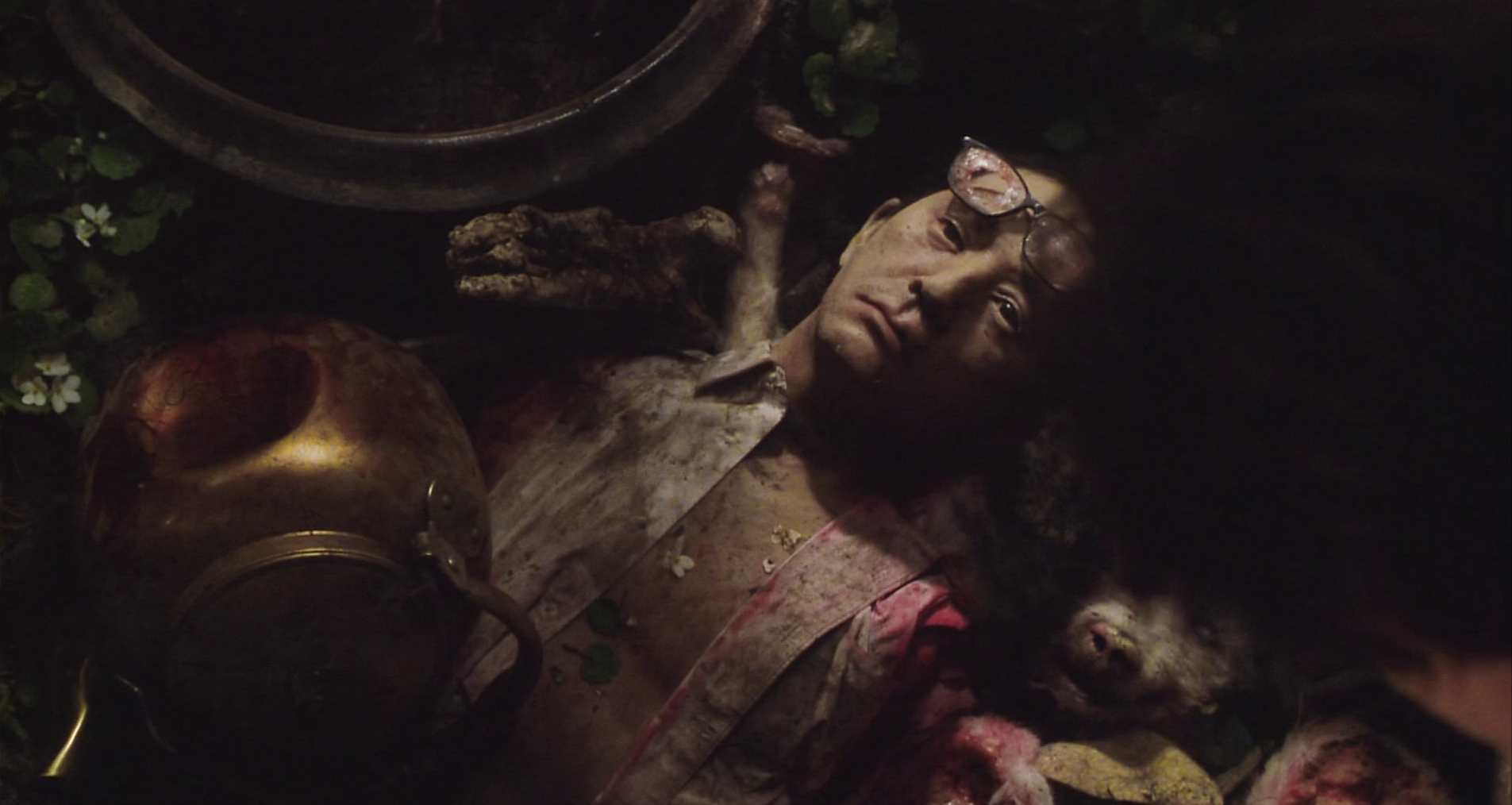
When my wife recommended I read Kishi Yūsuke’s novel Kuroi Ie (Black House), I was unenthusiastic. The idea of an insurance-fraud focused slasher novel just didn’t strike me as all that compelling. The fact that both the book and the movie adaptation (directed by Morita Yoshimitsu) appear on countless “Best Horror” lists did weaken my resolve, though, and when I stumbled across the movie on a streaming service I thought I’d give it a shot.
Holy shit, am I glad I did.
Yes, it is about a couple committing murder and mutilation in the name of insurance payouts. Yes, the protagonist is a reedy insurance company nerd. But, also yes, it is a batshit-crazy work of cinematic spectacle.
Setting aside the requisite slasher-film acts of senseless brutality, this is a movie that utterly defies expectation. It turns the sound of a dot-matrix printer into a squealing symbol of madness. It features clandestine meetings held in bubble-era strip clubs, intercutting frenetic shots of topless dancers with VHS-recorded scenes of a murderer washing his car with a garden hose. Its camerawork favors wavering hand-held closeups of sweat-drenched faces in various levels of distress, chaotic jump cuts, and Dutch angles. And you wouldn’t expect a movie that opens with child murder to be so funny, but here we are.
Oh, and how could I not mention that the climactic showdown features the female half of the murderous couple, Komoda Sachiko (played by Ōtake Shinobu), shrieking out “Suck my titties!”
Black House. It’s David Lynch meets John Waters by way of Sam Raimi, and I am here for it.
Trevor Henderson
Uzumaki (dir. Higuchinsky, 2000)
I hate to start off with one of those “when I was a kid” stories, but unfortunately that’s the lead-in here. It is what it is. When I was 14 or 15, thanks to the wonderful influence of my dad, I'd pretty much exhausted what the local video store could offer me in terms of genre fare. Together, we were relentless in our horror movie viewing habits, so I’d already watched and rewatched all of the gross-out cult classics that North America had to offer. I began to look for a source to obtain some of those titles I'd only heard whispers of at the time. The odd mention on a message board of something called Battle Royale, or Wild Zero, or Ring, unavailable to most, but out there for those with access to the right sources. I dug until I found a supplier. Some guy in Ohio or Nebraska, somewhere like that, with access to a couple of VCRs, a ton of previously unseen foreign horror movies, and a willingness to provide. For the right price, he would use those VCRs to make a pile of terrible quality copies and ship them onwards to Canada. I wasted no time in getting a money order from my corner bank, slapping it in an envelope, and praying I hadn’t just been ripped off. This was an obscene amount of money for me at the time, but it would be worth it if the tapes actually showed.
Thankfully, whoever he or she was, they were being honest about what they were selling. The tapes arrived, and I got my first exposure to such bizarre classics as Ring, Ichi The Killer, Wild Zero, Battle Royale, Happiness of the Katakuris, and my personal favourite of the bunch, the 2000 adaptation of Junji Ito’s towering achievement in horror manga, Uzumaki. This was the one I was absolutely most excited for. The first English translated volume of Uzumaki had just hit my local comic store in Oshawa, Ontario, the little nowhere town I grew up in outside of Toronto, and it had immediately blown my mind. And suddenly there was a horror film version? In retrospect, this was the perfect time to be most impressed by the film, as the film mostly covers the events of the first and second volume, lacking the budget to pull off Junji Ito’s ambitiously weird and wild apocalyptic ending (they include it in a rather inspired and eerie series of still images to cap off the film that I think works better than it has any right to. It’s horrifying).
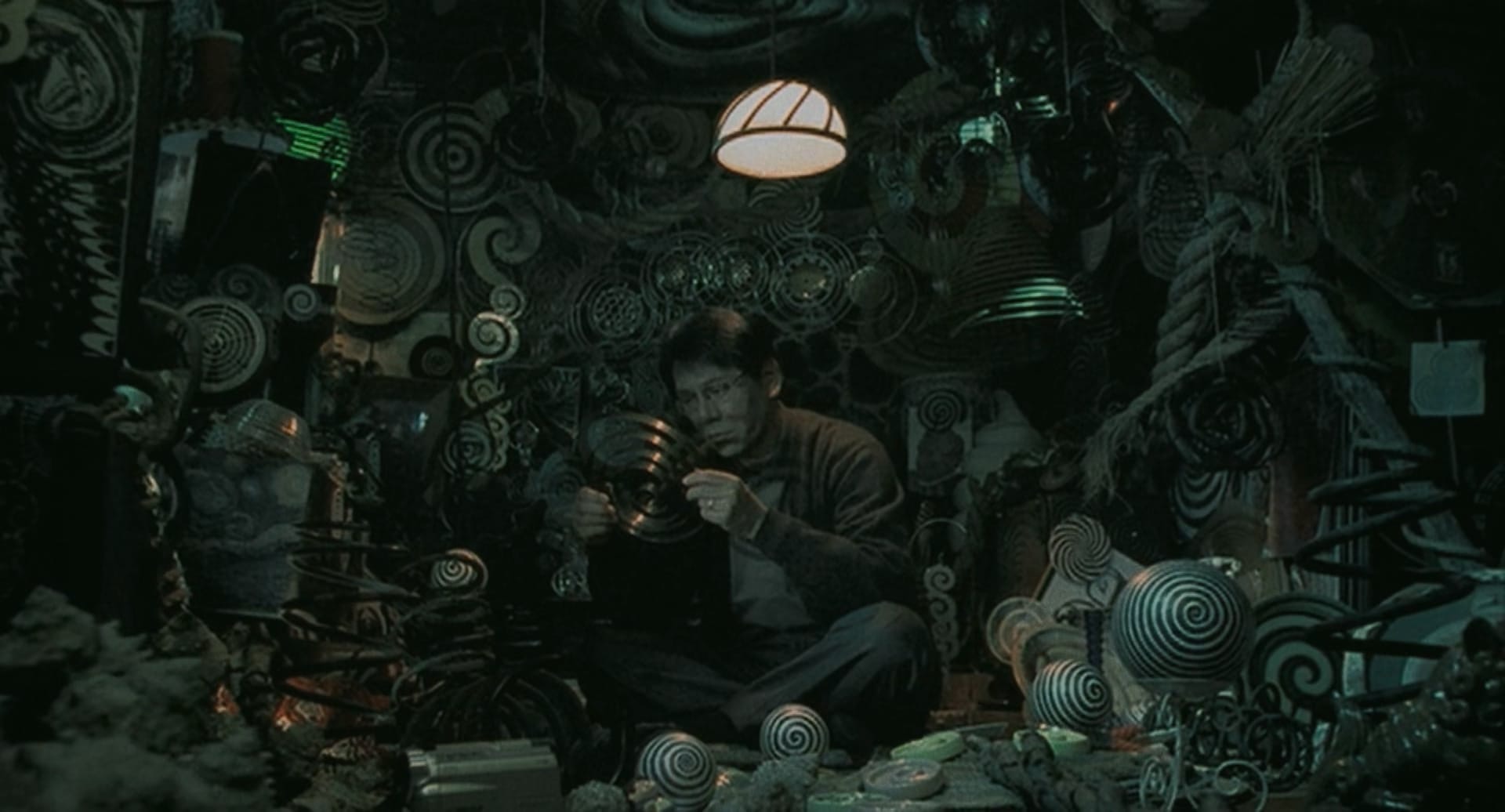
I popped the bootleg tape in my bedroom player one evening and sat witness to the crunchy, grainy glory on-screen. While nowadays I think that Uzumaki has its flaws, I still appreciate its devotion to atmosphere, stillness, and faithfully translating a ton of disgusting and iconic images from the manga to live-action. The film feels damp from beginning to end, everything green and grey and filthy. Visuals like Shuichi’s father’s den of collected spirals (an image that’s so good they made it the poster), the schoolgirl’s spiraling hair, and especially, a short found footage sequence of transformed human snails slowly crawling around the outside of the local school, all left inch-deep imprints in my brain at a very young age. I was completely obsessed. If you can watch this film and try to keep your lofty expectations from reading the manga at bay, I know you’ll come to appreciate the low-budget charms of what is, in my opinion, one of the very few truly great adaptations of Ito’s work to this day.
Trevor Henderson's website | Instagram | Bluesky
Manton
Fatal Frame (dir. Mari Asato, 2014)
“We were all in love with Aya”
Fatal Frame, the 2014 film written and directed by Mari Asato, left me with one of my favorite post-movie feelings, one that I can only describe as “pleasant frustration”. That infectious feeling that sets the room off into the type of conversations that, left unchecked, can bring about a severe case of “starting a horror movie podcast” (speaking from experience).
But if I’m honest, I didn’t even really want to watch Fatal Frame. The movie was chosen for my friend group’s recent movie night along with another film based on a classic survival horror videogame series, Return to Silent Hill (2026), for the simple novelty of making it a themed movie night.
However, as I sat slouched with slight disinterest, Fatal Frame won my attention and corrected my posture almost immediately for two reasons. One is that its main musical theme copies Goblin’s work on Suspiria (1977) very blatantly and I thought that was pretty funny. The second is that Fatal Frame is a very beautiful and ethereal film, in a way that genuinely sort of shocked me (and which did no favors later that night for Return to Silent Hill, lol).
I love the dream-like first half of Fatal Frame. Aya, the most beautiful girl in her all-girl Catholic school, has shut herself in her room. Rumors begin to swirl amongst the student body connecting Aya with a string of disappearances and deaths, a “curse that affects only girls” and a local urban legend ritual that the missing girls seem to have partaken in: If you kiss a photograph of your true love at exactly midnight, they’ll fall in love with you back. The trouble, though, is that Aya is just too damn beautiful and all the other girls in school are literally tripping over each other to put their lives at risk for just a chance at smooching the eerie photo of her that’s making the rounds at school.
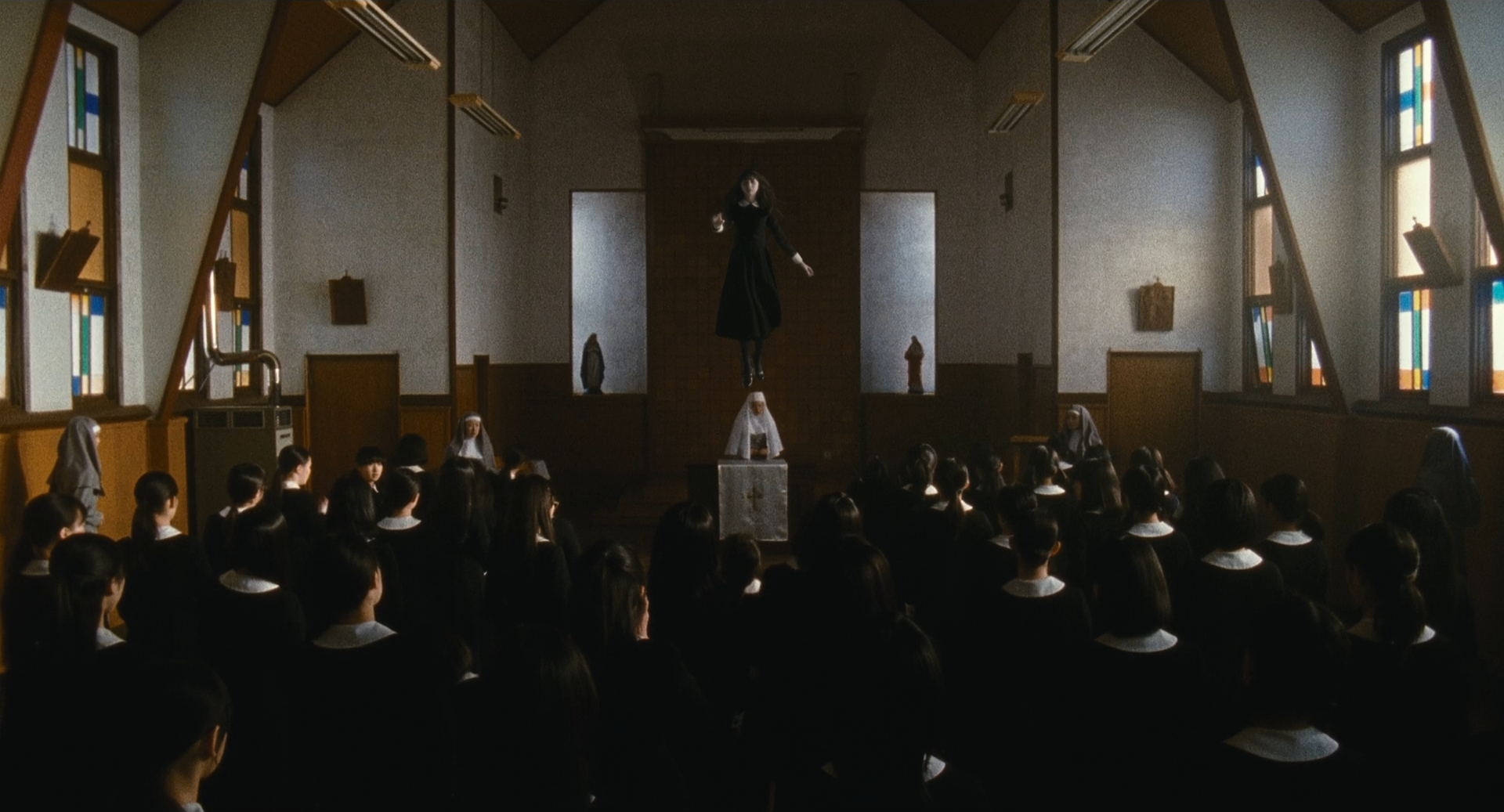
Although Aya is very much alive, her shut-in status and the swell of conversation and paranoia around her essentially create an entirely separate version of her: A ghost so beautiful that to merely catch sight of her is to become lovestruck and in turn, doomed. The culmination of this mass hysteria surrounding Aya results in my favorite scene of the film: During a wide shot of the girls practicing their performance of Ophelia’s Song for their upcoming graduation ceremony, Aya slowly appears, descending from the top of the frame towards our main character, Michi. As Aya floats across the church past each row of girls, they all swoon and faint and collapse to the ground like a line of dominos that just saw a really pretty domino. It rules.
The second half of Fatal Frame isn’t quite as strong, though. The film abandons a lot of its surreal elements and visuals once Michi finally meets up with the real Aya, and while they have some good scenes together (they defeat a group of bullies by kissing), the film becomes too concerned with answering every little question and ends with multiple attempts at twists that undercut much of the earlier intrigue.
To be clear, I do think the film is worth watching and is one of the better videogame film adaptations (though that status may be debatable as the film is technically based on a spin-off novel). But it’s hard not to feel like maybe there’s another version of Fatal Frame that exists in my head that I love in its entirety.
Though I think the scene comes a bit too early in the film and cuts short a lot of the cool Picnic at Hanging Rock (1975) vibes of its earlier portion, I do really like the moment where Michi finally encounters Aya in the flesh. After a handful of run-ins with Aya’s “ghost”, Michi can’t help herself anymore; Aya is simply too beautiful. She has to kiss that photo or she will die (we’ve all been there). But as she goes in for the smooch, the real Aya appears behind her and snatches the photo away.
“Get a grip” she says. “This is not me.”
Manton's YouTube channel | Patreon | Bluesky
Wes Black
Shirome (dir. Koji Shiraishi, 2010)
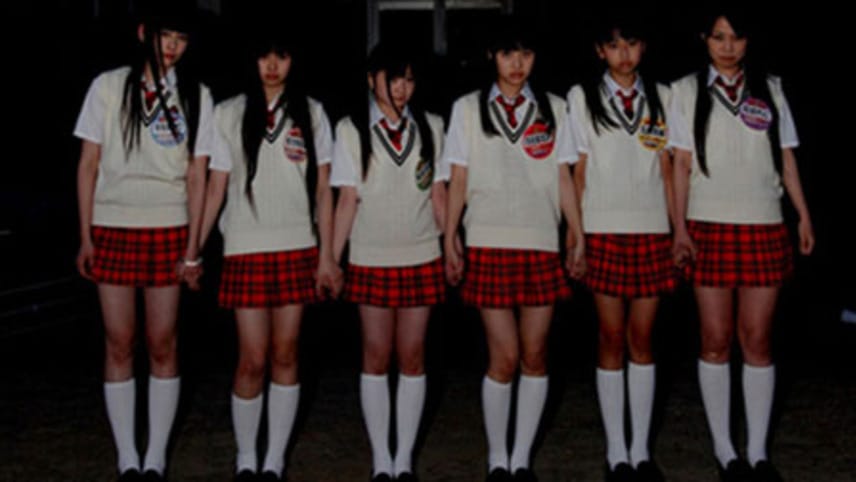
“If you could sell your soul to appear on the show, would you?”
Koji Shiraishi is a little stinker. You know it, I know it, the color-coded idols of Momoiro Clover, however, did not. Why else would they have agreed to participate in his proposed television one-off MomoClo Special: Haunted Spot Hunt— besides being forced by their management, that is?
Shiraishi, stinker that he is, never had any intention of making a televised puff piece. No, he was there to give these six easily frightened children an introduction to his domain—the world of fake documentaries. Fake for the crew at hand and those watching at home, but for Momoiro Clover, well, they didn’t exactly get the memo. The premise of this particular deception: a wish to Shirome.
According to the (bogus) legend, Shirome is a pearly-eyed kami said to grant the wishes of those who are pure of heart. But those who are not will be driven to death or madness, their souls cursed. Momoiro Clover’s mission: seek out this entity’s shrine in an abandoned building, and state their wish— to appear on NHK’s long-standing New Year’s Eve song and dance spectacular, Kohaku.
Unfortunately the last to appear before Shirome with a wish was a pair of schoolgirls who were later found dangling with jump ropes wrapped around their necks. Or so our idols are told by ghost storyteller (and Shiraishi regular) Yuki Yoshida as they huddle together on the floor, shrieking, wailing, and begging not to go.
Yet despite their protests, the six are loaded onto a bus, blindfolded, and dumped outside of a derelict schoolhouse where Shirome awaits in the form of a butterfly on a classroom wall. Once inside, they’re paired with a faux psychic and exorcist duo, and ambushed by every cheap trick in the haunted house book: dark corridors, rattling windows, banging doors, phantom footsteps. Shiraishi keeps the affair lo-fi, keenly aware that the greatest special effect of them all is their tears.
Now was he merely appealing to our inner grinning sadist, or did Shiraishi have more on his mind than cruel practical jokes? Perhaps the whole film is a metaphor for how these kids are cursed from the get-go, whether they’ve crossed the wrong deity or not. Death and madness was always their destination, not due to a butterfly on a schoolhouse wall, but an industry built on the bones of those who were long ago fed into the idol meat grinder. Maybe Shiraishi was trying to condition them for the real life horrors yet to come—or provide them a warning sign, a chance to turn back before it’s too late. Or maybe he’s just a little stinker who tried to have his cake and eat it too.
As for Momoiro Clover (since rechristened Momoiro Clover Z), they wouldn’t make it to Kohaku that year. That wish would remain unfulfilled until they signed with Universal Records, and endured a different type of ritual— a public weigh-in ceremony to ensure no member exceeded the maximum “idol weight.” If that’s not cursed, I don’t know what is.
Wes Black’s Bluesky
Ersatz
Warning from Space (dir. Koji Shima, 1956)
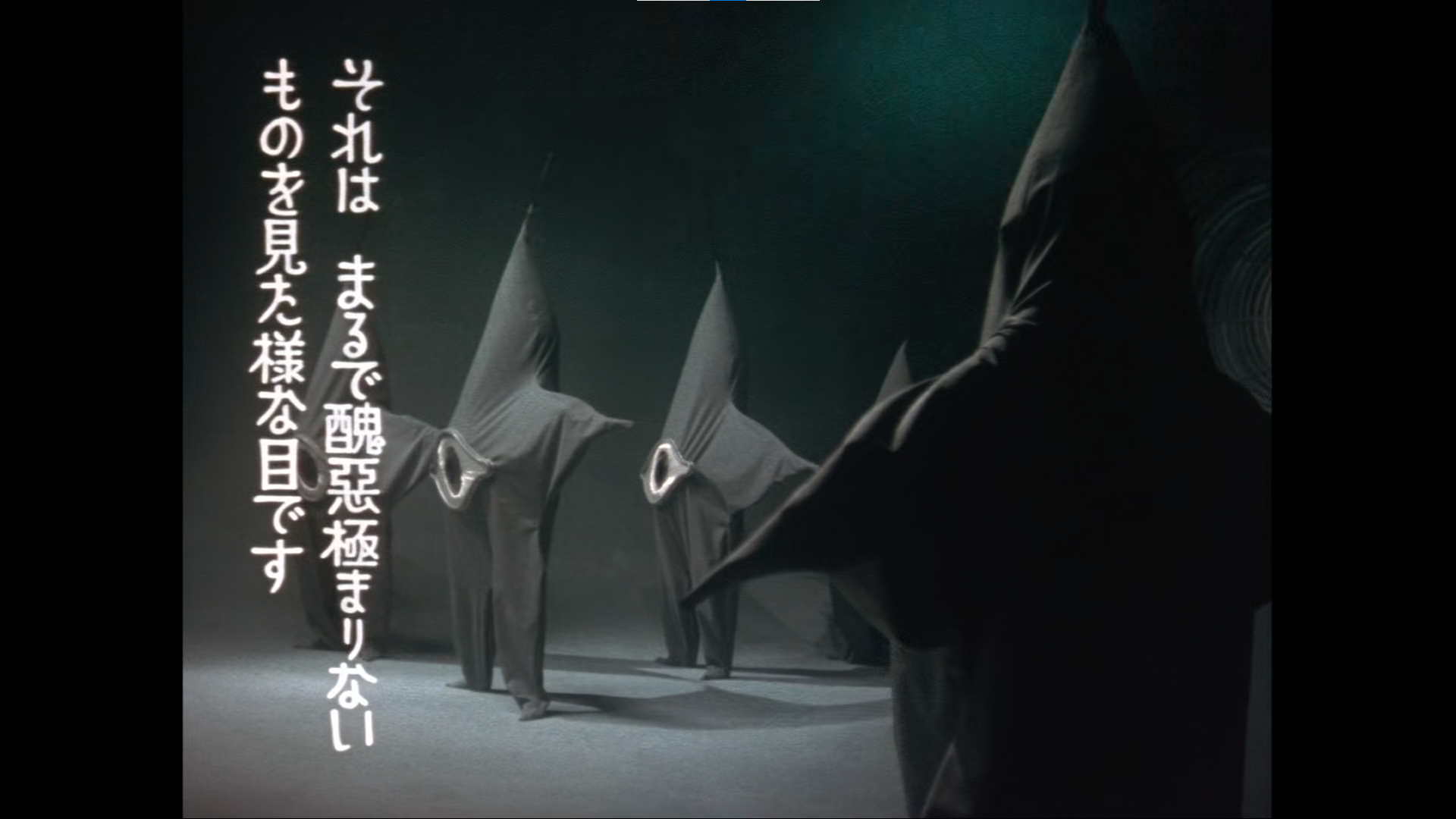
As an avid lover of Heisei-era tokusatsu, I really wanted to get back in touch with the golden era of the genre by watching some of the movies that came hot on the heels of Godzilla. One little film, with its odd cyclopian starfish aliens (designed by legendary artist Tarō Okamoto), really stood out amongst its contemporaries to me. Even if you've never heard of Warning from Space, you've definitely been touched by a vector of its influence.
A rogue planet is on collision course with Earth, and a technologically advanced race of alien beings want to deliver a warning to help humanity save themselves. If you have even the preconceived notion of a "50's sci-fi movie", you're already familiar with what you're getting into here, but I just really love how this movie enjoys its quiet time. The characters are very simple, the narrative doesn't really evolve beyond its base premise, and the soundtrack is very subdued, culminating in a surprisingly eerie, grounded view of first contact; you feel like you're merely an observer to the situation unfolding before you. The first 1/3 of the movie in particular as the Pairans attempt contact with humanity, is so atmospheric and effectively creepy for a movie trying to get your ticket purchase with its pyrotechnic budget.
Speaking of a pyrotechnic budget, damn this movie looks good! It's worth noting that Warning from Space was the first Japanese sci-fi movie produced in color, and they went all out on making the movie look great. The colors are bright, the sets are cluttered and detailed, all the miniatures are adorable, and the explosions and destruction as the planet nears closer to collision is so, so marvelous. The dull, grey, almost monochrome design of the Pairan spaceship being broken up by the bright blue of the Pairan's eyes lighting up as they "speak" is really surreal and a huge highlight.
There's a lot that's been said about the cathartic nature of creating a film like this for a nation still healing from its own devastating rampage, but I want to contrast this movie's ending with Godzilla's. They're pretty much the same; humanity creates a terrifying new weapon of mass destruction, utilize it to save the world, then are left to reconcile with the implications of this weapon's existence. Whereas Godzilla ends on an incredibly somber note, punctuated by men and women crying to a haunting chorus, Warning from Space responds with the sound of children laughing and singing for tomorrows they will get to experience, and I think that's beautiful.
Ersatz's Bluesky
Wren
Godzilla vs Hedorah (dir. Yoshimitsu Banno, 1971)
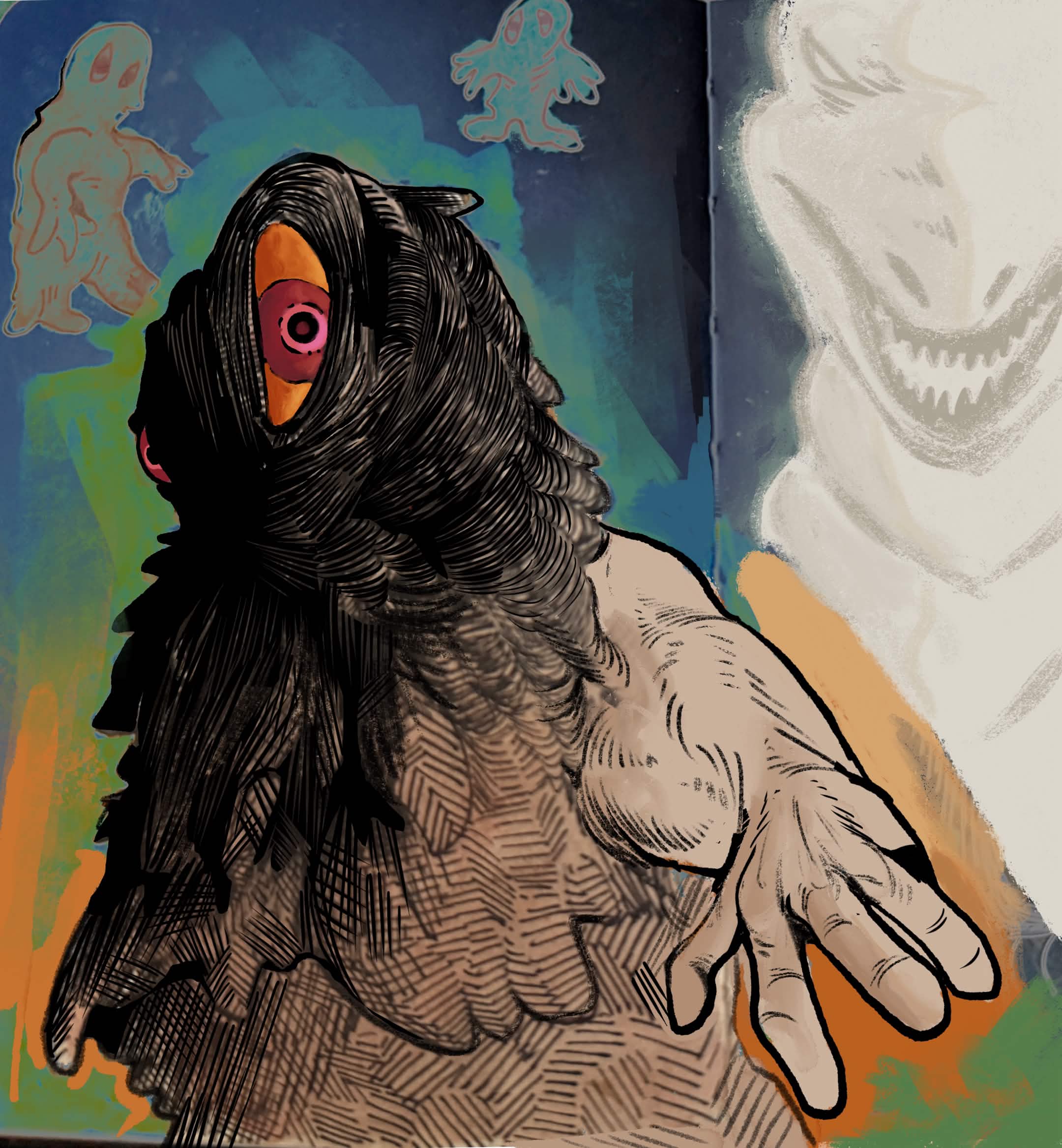
The only Godzilla film to be directed by the late Yoshimitsu Banno, Godzilla vs Hedorah occupies an odd space in the atomic dinosaur's storied history. Positioned between the widely reviled All Monsters Attack and the pretty rad Godzilla vs Gigan, Godzilla vs Hedorah takes its eclectic shape as an all-out swing from someone with so many confounding ideas. Animation, collage, the power of song, the fears of pollution. All these concepts coalesce into a film full of questions and odd shot composition. A piece of art worth your time, and for good reason.
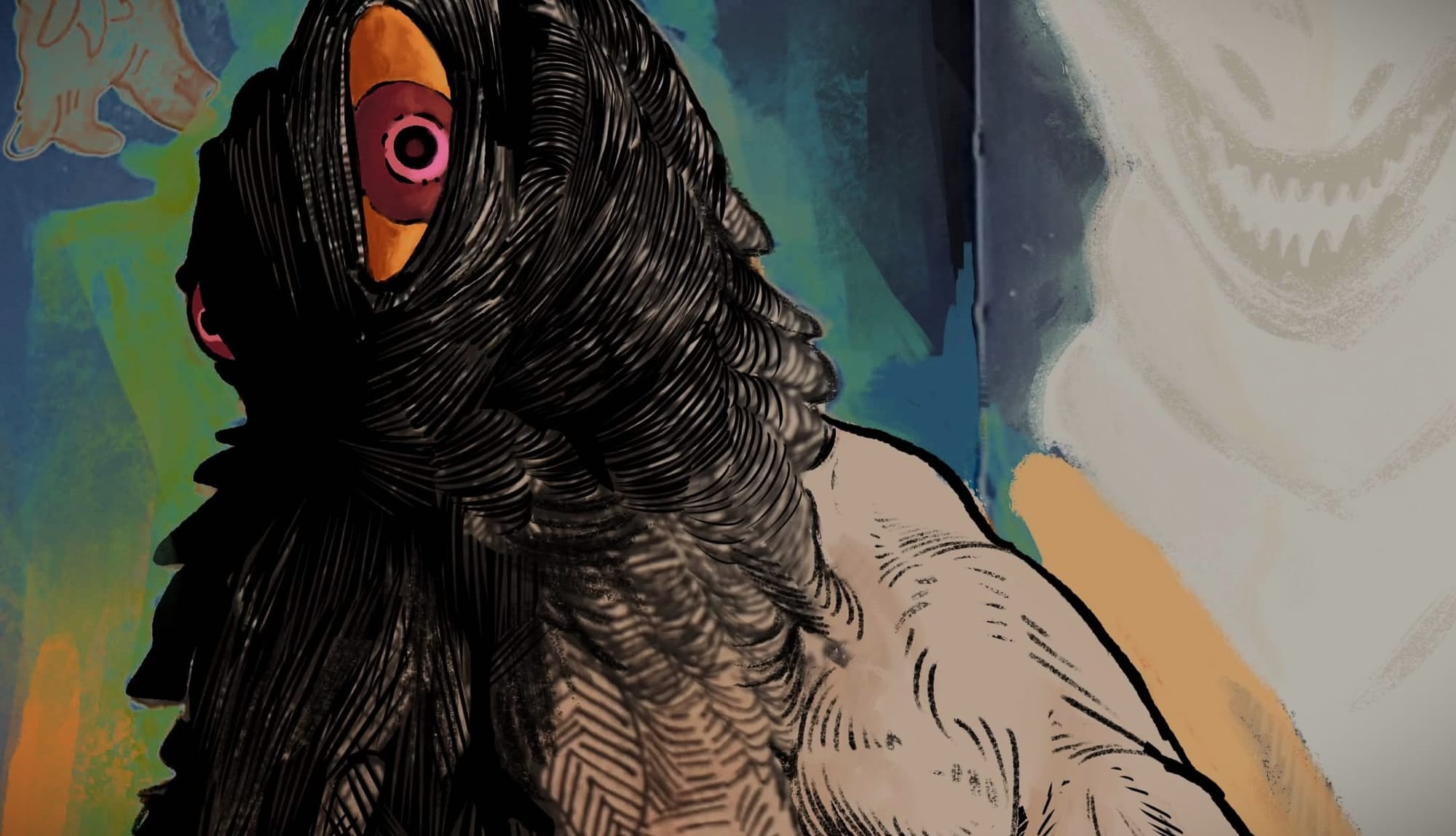
The creature we know as Hedorah stands out in Godzilla’s rogues gallery. Visually, the guy is inspired. A rapidly morphing form, shifting between meaty flying saucer and hulking demon beast. Made of sludge and grime he hulks through Japan's streets sowing terror and discord. He is all parts gooey and slimy, his two eyes like lightning strikes of color in the murk of desaturated browns and reds that make up the larger body. All of this aids in his unique visual language. Much like the film he comes from, the beast is equally silly and off-putting depending on the framing. A design like Hedorah’s could receive no visual changes and shift mood entirely based on camera angle alone. Unlike that of my dear, perfect son Ghidorah would be hard pressed to do the same. It’s a design that’s inherently malleable to the context it’s placed in, making it the ideal candidate for a film that seeks to switch tones at the drop of a hat.
While watching the film, I kept returning to Nobuhiko Obayashi’s 1977 classic House. A film that also asks the audience if making people into piles of stuff is really funny. I think there is horror to be found in absurdity and both these pieces work within the space to elicit some odd discomfort in their audiences. In the case of Godzilla vs Hedorah we see these jarring shifts in tone and medium. I harken back to collage, a medium that seeks to combine the disparate to elicit something altogether new and striking. In the case of Banno’s film we see animated segments mixing with seeming stock footage and musical numbers. It’s amok with varied ideas and tones that one might get frustrated. What do you expect of me here? What could you possibly want? I scream this at my TV from my slowly moldering couch, a piece of garbage once set for the dump. Now sitting proudly in my living room after a series of thorough washings. A piece of furniture that much like Godzilla vs. Hedorah may be off-putting at first glance. It’s a rehab’s dirty old couch after all.
But much like its successor, House, Godzilla vs Hedorah is a damn fun time. It’s silly! It wants you to laugh. Even at gore and horrific moments there’s an edge of “oh dude, good bit” I feel radiating off the creative choices. It’s a film that takes itself seriously and gives very real credence to the slow death we’re making for ourselves. It wants you to be afraid of what’s to come. But the film also has Godzilla blasting himself after Hedorah with the power of his own atomic breath and a tiny boy finding himself in a constant fight for his life due to his parents' poor choices. This is a silly film, but one that I feel deserves a place in the horror canon alongside films that take similar swings. Watch the film if you haven't, and rewatch it with my impish form whispering on your shoulder if it’s the second time. Maybe even buy a dirty couch afterward. Just be sure to wash it a few times.
Wren's podcast | Patreon | Bluesky
Sorry, no recommendations this week – you already got ten up there, don't be greedy!