
Talking games | Detective Saburo Jinguji: The Shinjuku Central Park Murder Case
When a corpse is the world

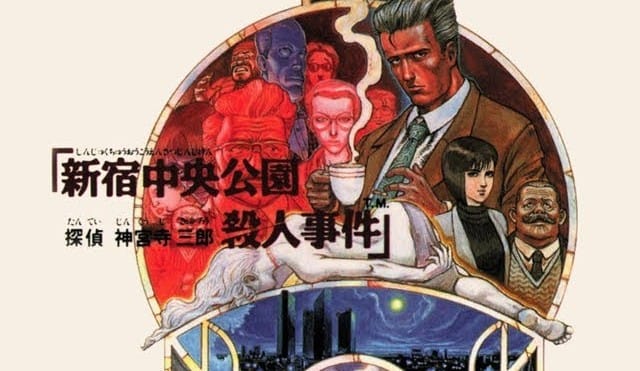
You never see the victim in Detective Saburo Jinguji: The Shinjuku Central Park Murder Case. Not even a picture. Not even a corpse.
Oh sure, they're there, you know her name—Momoko—and her past and where she died—body discovered in the middle of Shinjuku Central Park—and yeah, everyone else around seems to know perfectly well what she looked like, even the character you’re supposed to be, detective Saburo Jinguji. He has a picture of her on hand at all times, after all. He shows it to others and looks at it plenty himself. But you the player never see an inch of her.
From the start until the very end, she remains nothing more than a shadow to you. The concept of a person. A problem to solve. An idea.
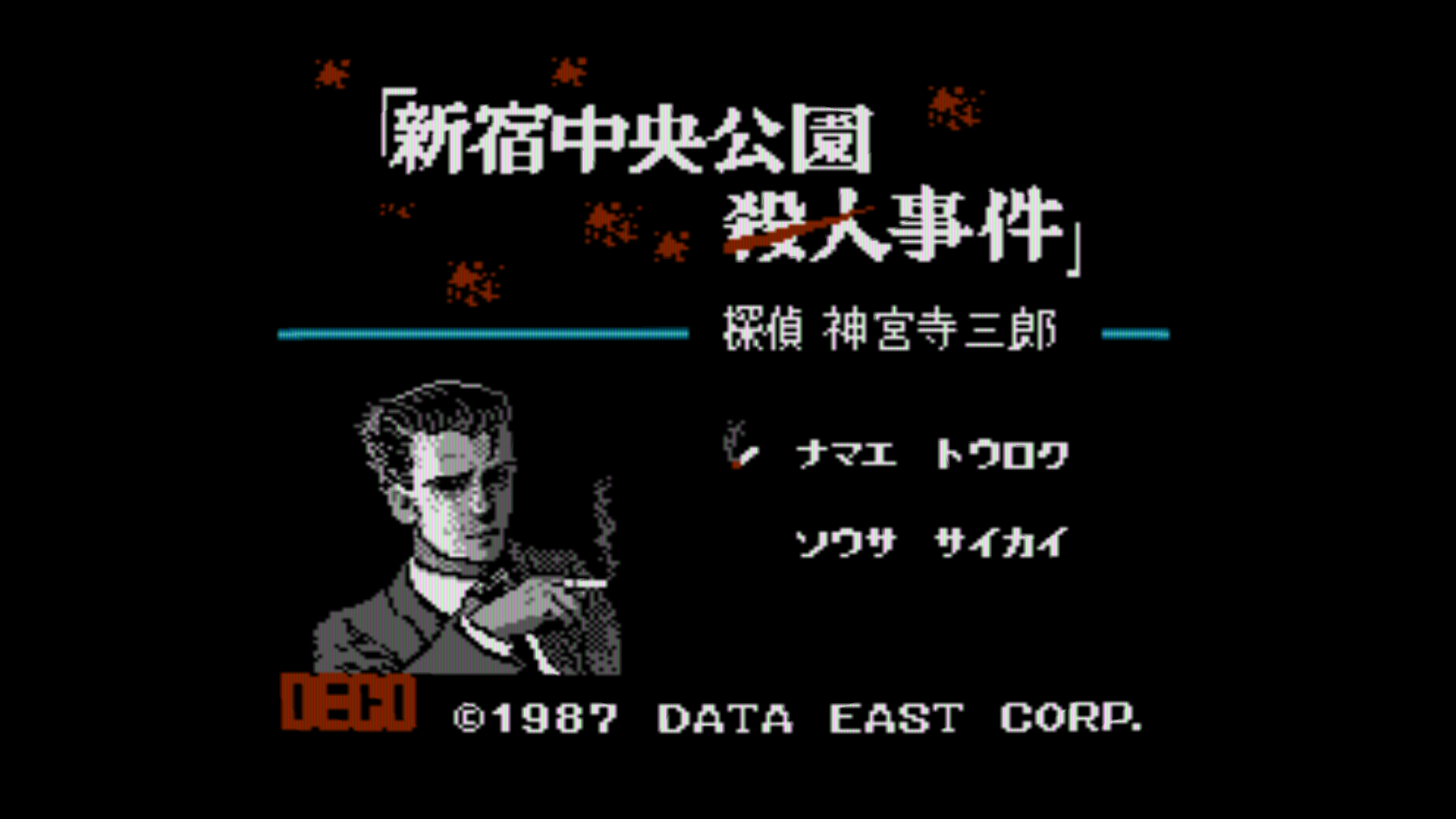
Released in 1987 in the midst of the detective adventure boom that exploded with the release of Yuji Horii’s metaphysical masterpiece, The Portopia Serial Murder Case, it feels surprising looking back that Detective Saburo Jinguji: The Shinjuku Central Park Murder Case (I’ll just call it The Shinjuku Murder Case from here) became what it did. It’s a misshapen game after all, rough around about every edge it has—difficult, vague, short, simply written, largely lacking music, decidedly simple graphics for its year, etc, etc.
But forty years later and Saburo Jinguji—known as Jake Hunter in his smattering of English releases—has promoted himself to one of the most significant detectives to ever grace the medium, and almost certainly the longest lasting. The series now supports well over a dozen mainline entries and even more mobile titles (as in pre-smartphone mobile) with several considered masterpieces of the adventure genre in Japan. It’s a series with its own history, its own legacy, its own world and gravitational pull.
Back in ‘87 though, it was just a single game, a humble title unknowingly kickstarting a legend the same way all detectives get their start: with a body.
One of the great expressive tools in video games is the RPG world map. In a medium defined by space, place, and abstraction, it’s one of the most interesting and widespread examples of all three wrapped up into one. The hero of Dragon Quest exits a town and becomes as big as its entirety, forests and entire mountains reduced to the same size as a dying village or the entrance to a cave, everything and every place in life granted the exact same level of importance and value. With world maps, existence is constantly expanding and contracting, shifting its scope around the player character. In its attempt to represent great distances, it becomes a strange and moving parallel to how we experience and comprehend space.
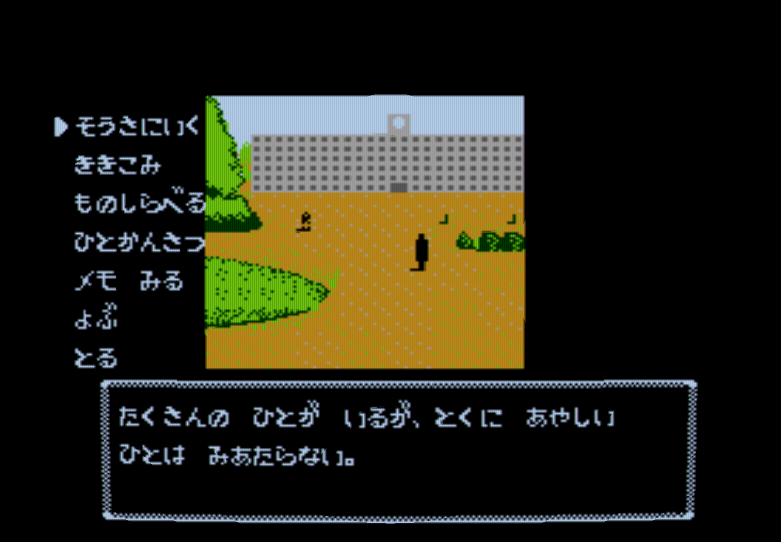
The Shinjuku Murder Case takes the idea of the world map as presented in RPGs and shrinks its scope dramatically. Here, instead of a continent or planet, you have a single park to explore—the park Momoko’s body was found in. At any point you can select an option to examine your surroundings, and most of the time nothing happens. Very rarely though, a place will matter to you. An unmarked square here, or an unassuming patch of grass there will have a purpose for the case of Momoko and the game will transition into a traditional front-facing adventure game screen.
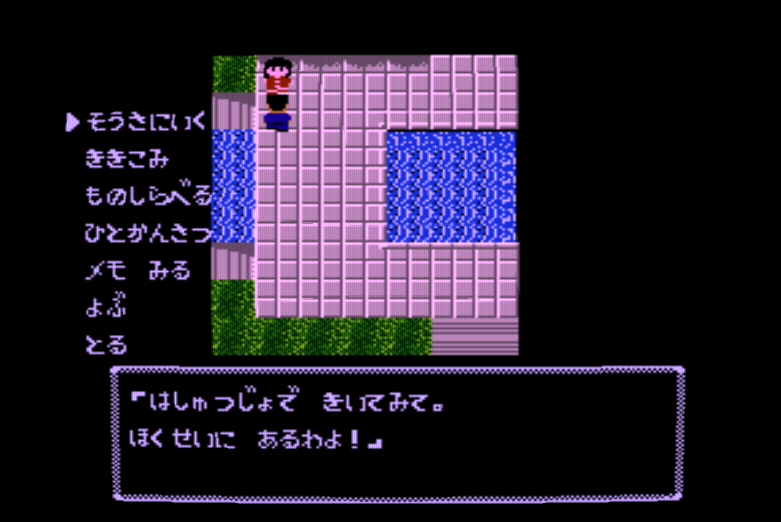
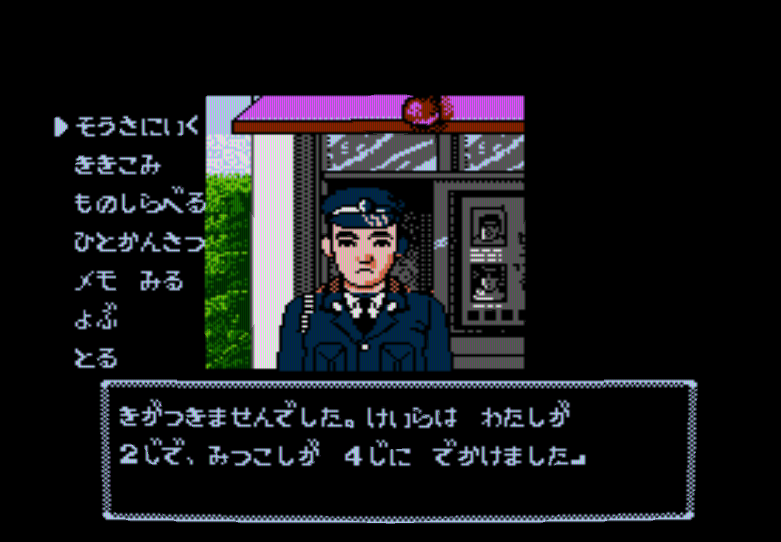
One of the more infamous challenges of the game's map is finding the park's police box.
Suddenly every step taken in the park can mean something, can hold something, can be part of the clues that lead you to solving Momoko’s murder. There’s a lost dog hiding near a bridge, a park full of kids, a dropped lighter on a sidewalk. How do they relate to the body of a young woman? Do they relate to it at all? It doesn’t matter. What matters is that they could, and so like a mountain and a village in Dragon Quest, they take up the same space all the same. Their scale has nothing to do with their literal size anymore.
The result is that this area of Shinjuku’s Central Park becomes, in a way, a world map for Momoko’s death, a grand abstraction where place becomes person.
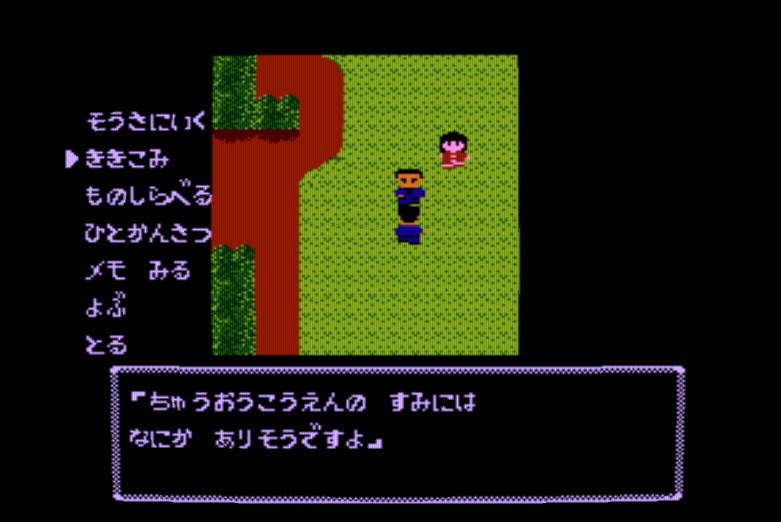
Fair warning, though: If you don't know how to play early Japanese adventure games and don’t want to use a guide, then The Shinjuku Murder Case will be a nightmare. If you do know...well, it'll probably still be a nightmare because that's just how these games are. These are games meant to be played with an aggressively methodical mindset, with spreadsheets and notebooks studiously cataloguing what you ask to who. They are mired in process, making odd plays towards replicating the procedural, monotonous reality of detective work, demanding either repeated dips into purgatory or crowdsourcing answers with others. And even then, because of the map (and because it also introduces a time element), The Shinjuku Murder Case—unlike more contained games like Portopia—is MUCH harder to brute force, the near limitless potential for information crushing cataloguing methods under its heel.
I bring this up to say that the game is, like a lot of art, one I find myself loving on reflection more than in the moment. It’s one that shines in memory, in consideration, in its own kind of abstraction. When, like the way a map turns the world into symbols, I can zoom out away from then frustrations and view the game as holistic experience, it all becomes so much more evocative to me. It starts shining in all new ways.
Not that it doesn’t do a fine enough job being evocative on its own. The Shinjuku Murder Case is deeply seeped in then dominate hard boiled and noir aesthetics (though the rise of the shin-honkaku—a sort of return to classical fair play mysteries—would emerge the same year as this game), in host bars, organized crime, sex and violence and people whose lives didn’t lead them where they wanted to go. It’s packed full of the pixelart equivalent of ‘70s character actors, everyone balding and wrinkled and holding heavy bags under their eyes as they yell at you to just leave them alone already. It’s also, at the end of the day, a mystery. And peel any mystery back far enough and what you’ll be left with is always the same.
Tragedy.
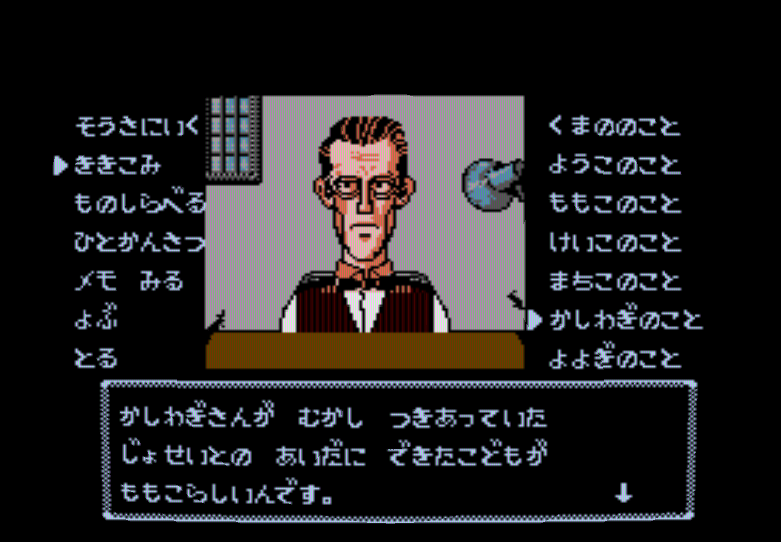
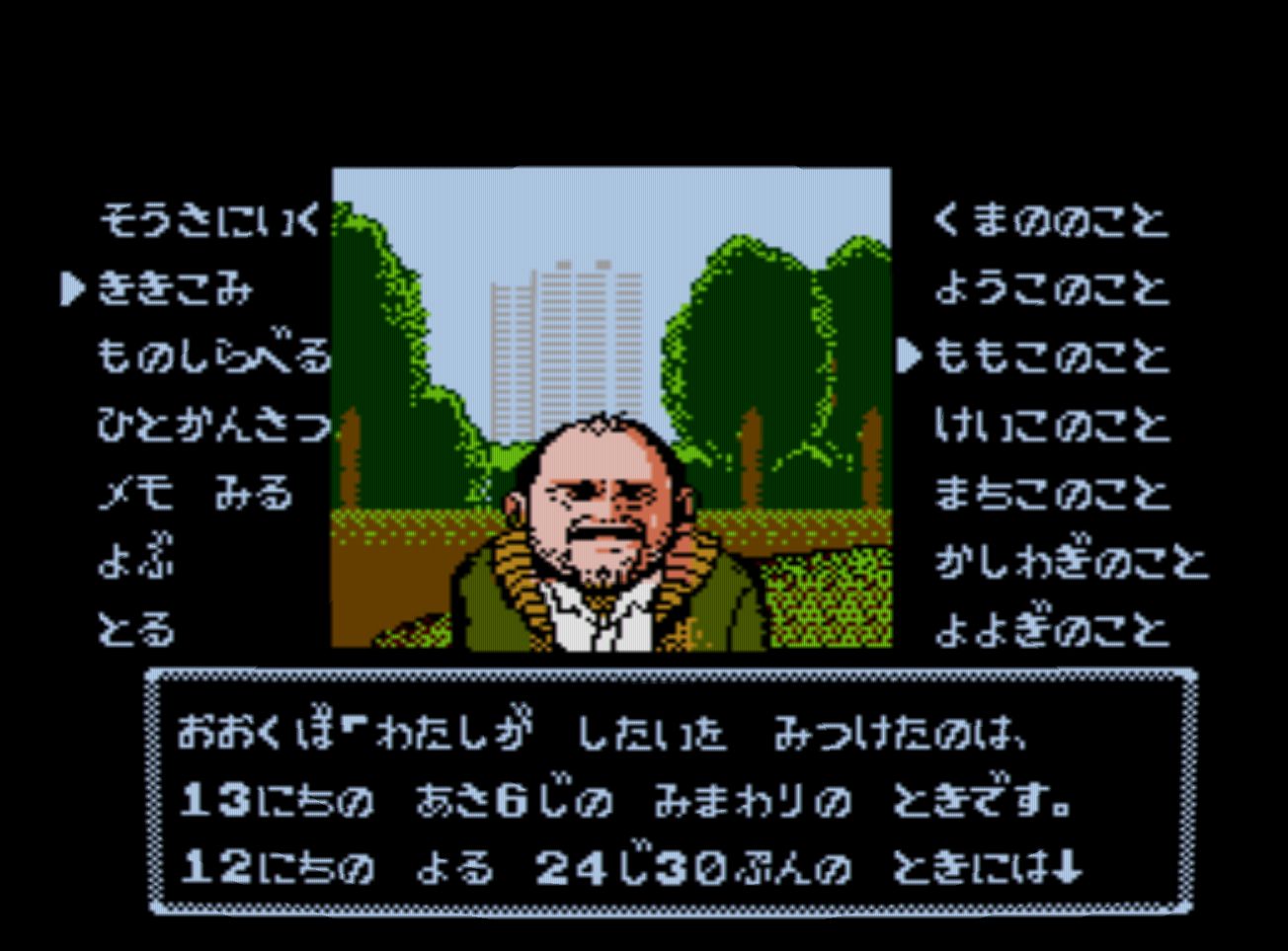
The solution to Momoko’s murder is infamously absurd (SPOILERS it involves yakuza, unknown children, and a hang glider). It might have been inevitable. The absurdity is part of the joy of the genre, this incongruous blend of logical realism smashing against loose, elastic imagination; the very often conceptually silly used to express the unbearably tragic. All of this nonsense, all of this impossibility, all of this zooming out on a person to visualize them as something other than human, and for what? How can the murder of another be anything but absurd? How can Momoko’s fate possibly be justified in any way that isn’t as nonsensical as it is tragic?
When it’s done and the case is solved, The Shinjuku Murder Case ends with a thank you message to the player. It’s a common enough sight in older titles. Unlike others though, here, the message isn't for playing the game. It's for playing the part of Jinguji.
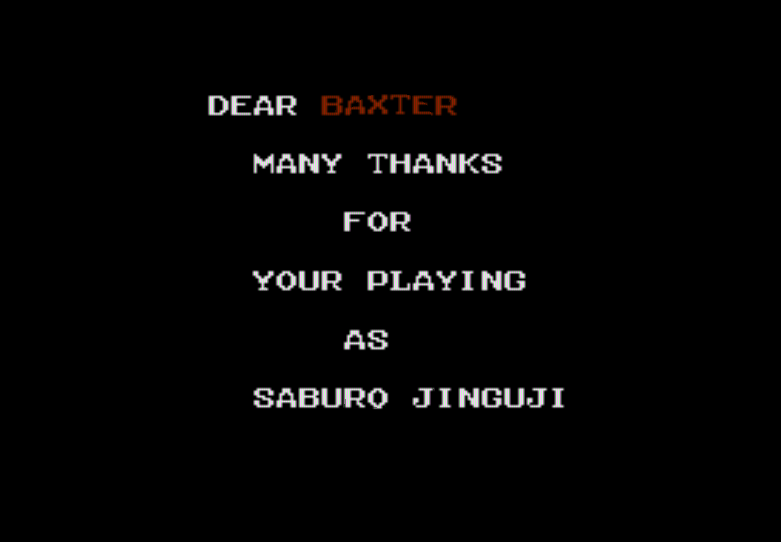
After everything, after all of the headache and frustration and tragedy, the game effectively looks you in the eyes and tells you that none of it is real, that Jinguji is a character and you just his actor. All of it, every single inch, is just like Momoko and just like its map of Shinjuku: nothing more than a story, a symbol, an idea.
A corpse and a map; an actor and a game. Symbols on symbols all the way down.
I wonder what she looked like.

Music of the Week | Undercurrent by Liberal Music
You absolutely know Kazumi Totaka. Even if you don't know his legendary music work with Nintendo over the years (Animal Crossing! Wii music!!) you've 100% heard that dino Yoshi make some grunts, and folks? That's Totaka. Before more completely dedicating himself to the world of Nintendo though, he put out some real nice albums, like this one: a dreamy, jazzy downtempo thing full of samples and experimental touches. It's like some 60s space age band took a bunch of drugs and found themselves in the chillout room of a club: slow and almost calm but with this bizarre edge both energetic and slightly ominous poking out from several corners. He def didn't mean it to be, but this is top line music for the internet.
Book of the Week | Strange Houses by Uketsu
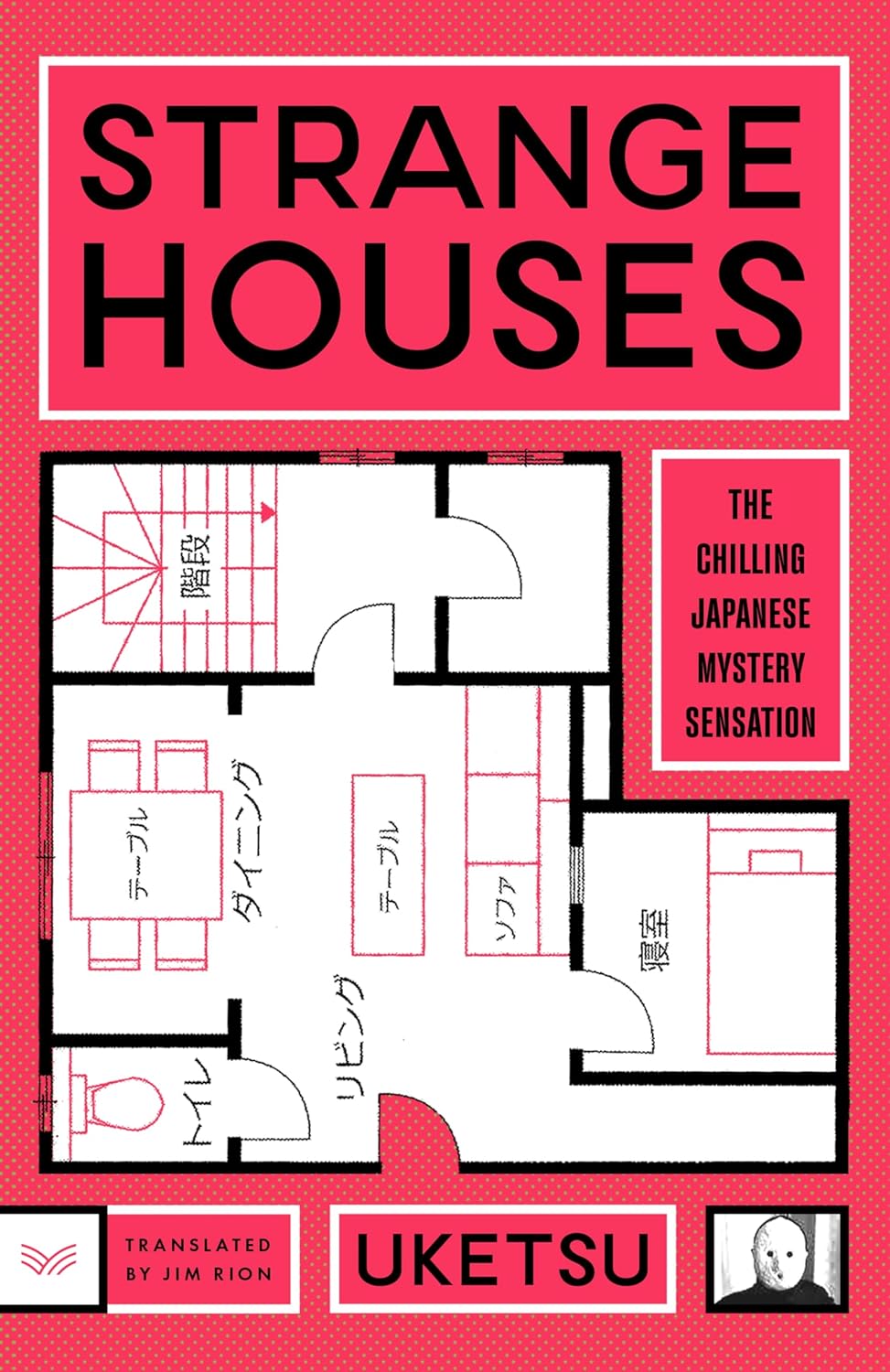
I wrote about the original blog post and youtube video that kickstarted this horror phenomenon, but Uketsu’s novel adaptation/expansion of his now worldwide hit is the best of them all. With an absolute perfect concept, it follows the evolving investigation of a series of bizarrely constructed houses—places with rooms that make no sense and walls where they shouldn’t be—and the awful potential truths their designs might suggest. It’s blueprint horror, a deeply readable blend of mystery and horror as you stare at floor layouts and try to figure out what exactly the problem is here. Pure thrilling fun (also translated into English by friend of the blog, Jim Rion!)
Movie of the Week | Tuff Part 1 - Origin (dir. Masato Harada, 1990)
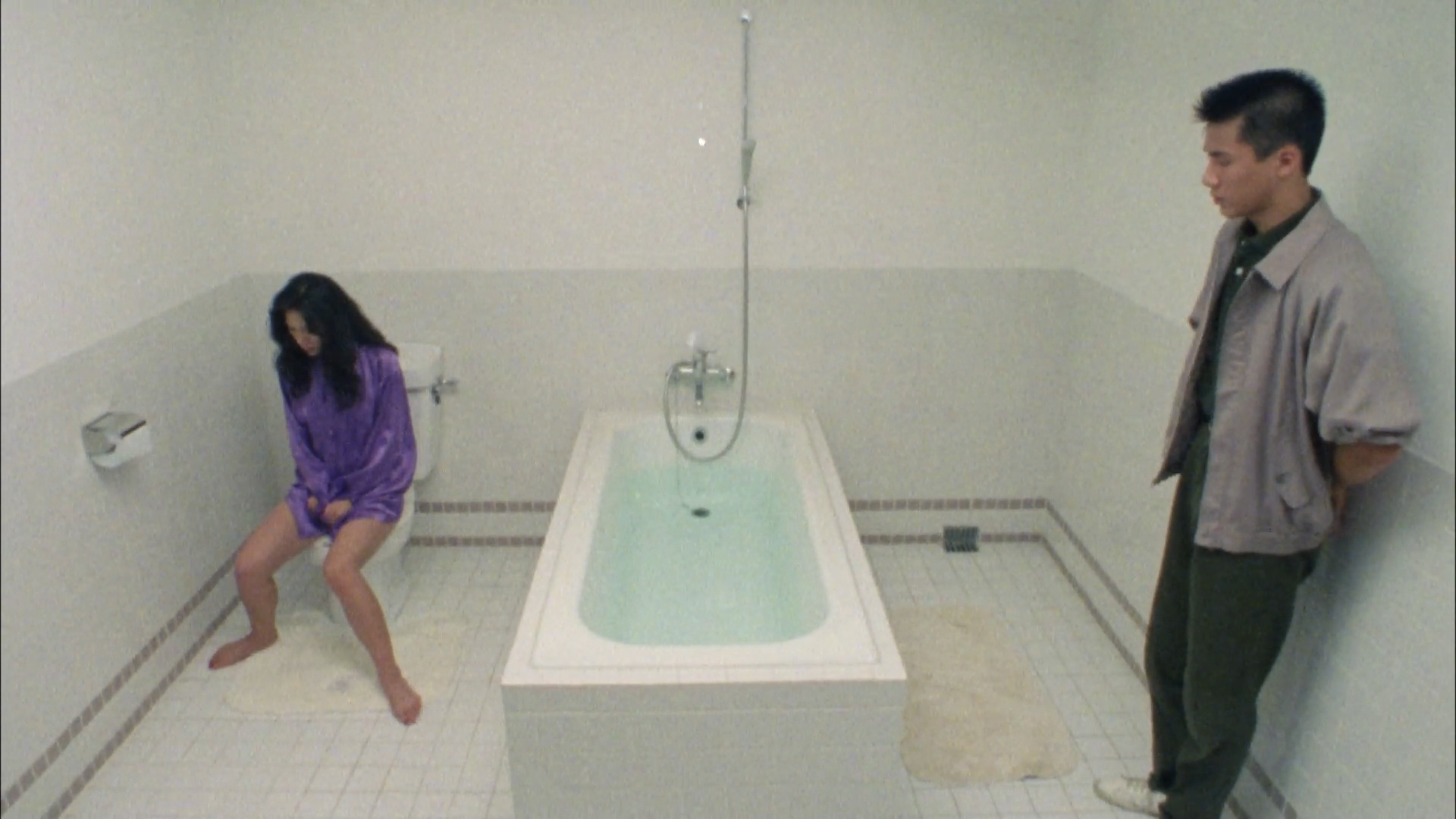
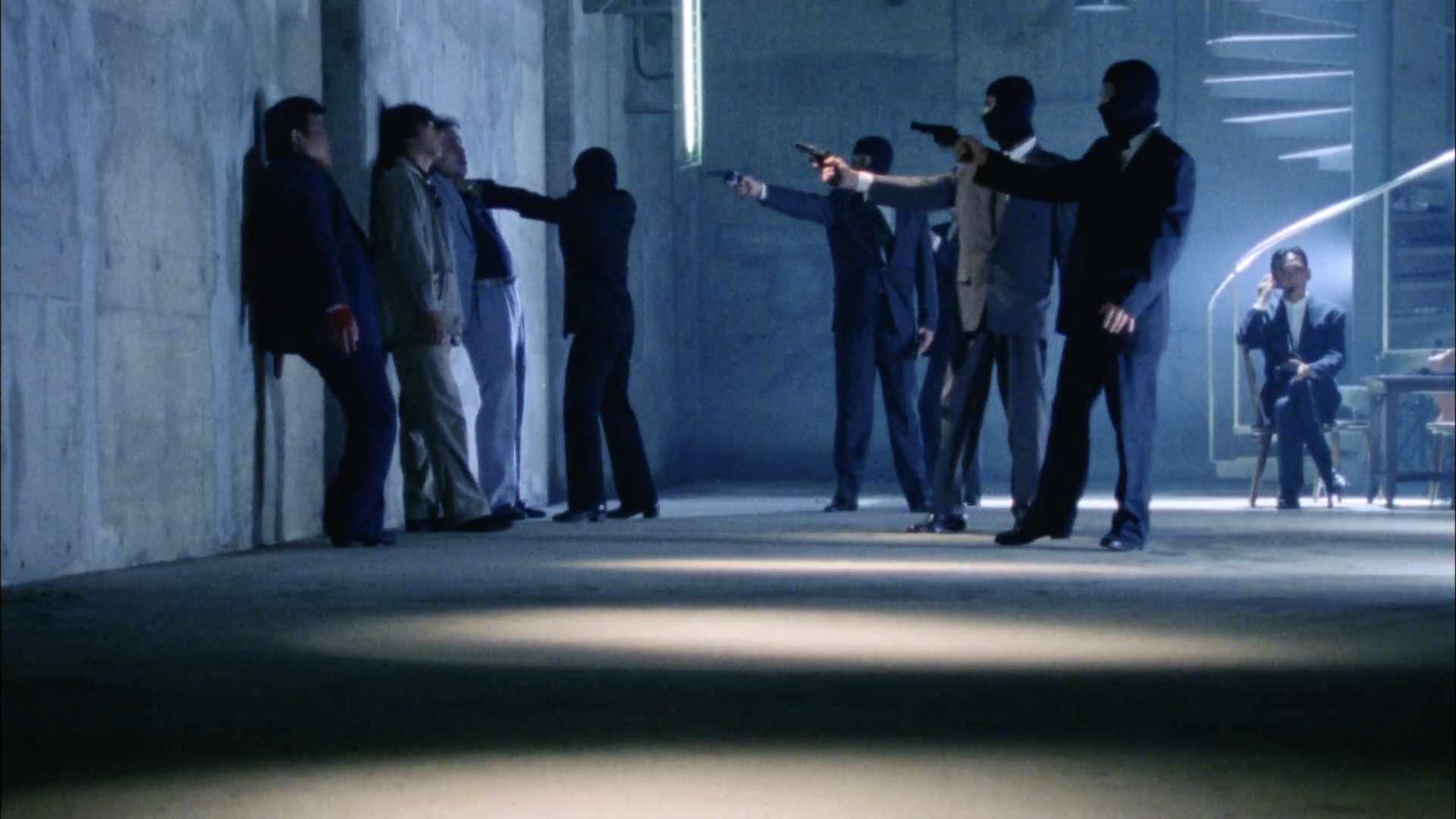
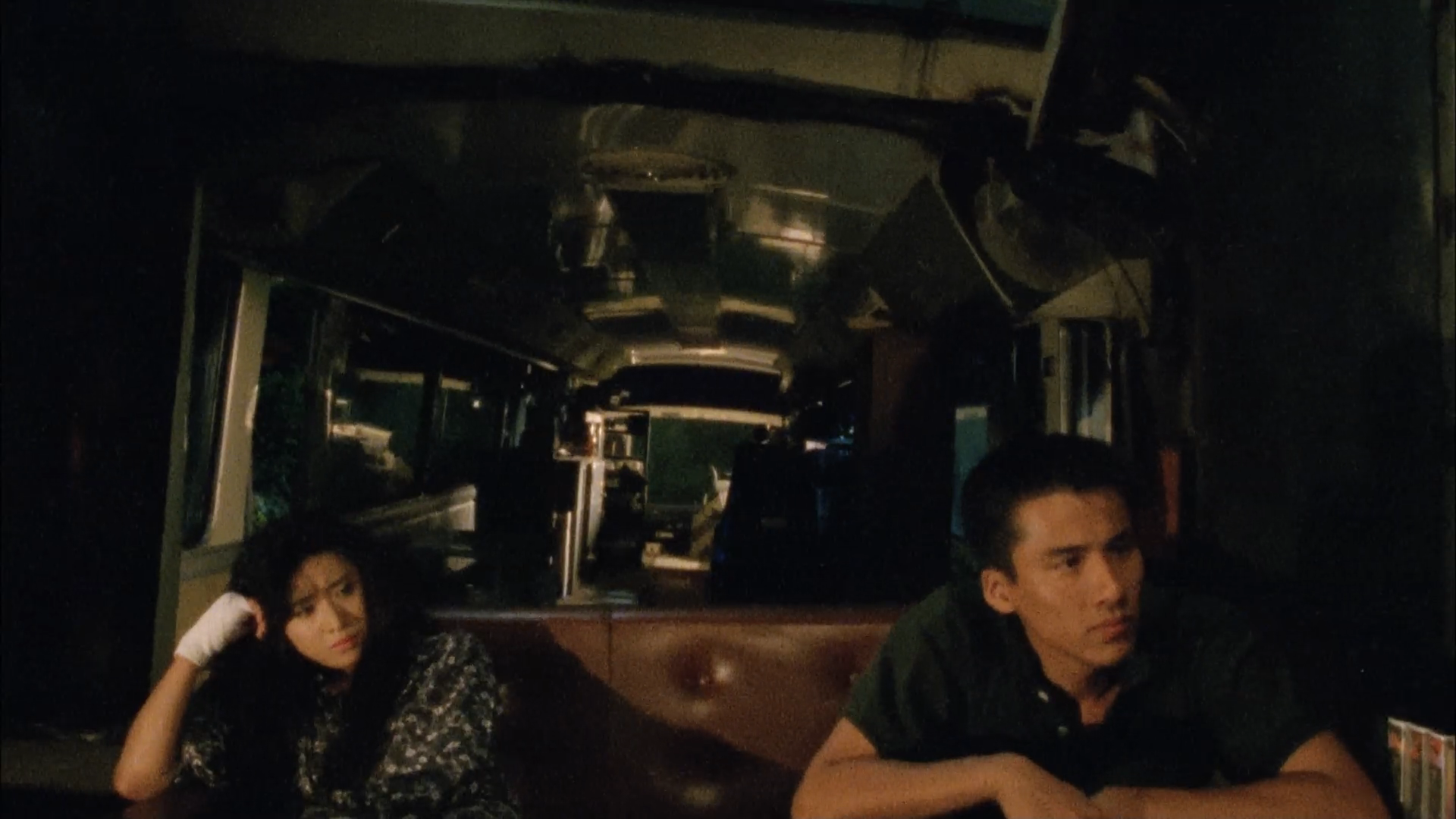
A yakuza myth, crime and violence and stuff films turned mystic. Like Harada’s later Kamikaze Taxi (a perennial object in my personal canon), the beginning entry of this direct-to-video crime saga is drenched in an almost fable-esque atmosphere while simultaneously bursting with a sense of desperation and resignation. It’s a movie about people with no future stuck in pointless games of murder but filled with quiet poetry and contemplation. All of it is maybe best summed up in a single moment: when the protagonist shoots a gun for the first time, it is in a bamboo forest. His immediate reaction is to reach up and smell the gunpowder on his hand. Beautiful stuff.
Have thoughts about anything covered this week? Got a recommendation you’re dying to share? Want to tell me how handsome and cool I am? Leave a comment below!
oh and if you want to learn more about the Saburo Jinguji series, here's two FANTASTIC video essays full of info and insights (and even interviews!). One from Impact Zink ( Japan’s Greatest Detective Game Series You’ve Never Heard Of) and another by F_T_B (Tantei Jinguji Saburo / Detective Saburo Jinguji: 40 years of Japanese Noir Adventure Gaming). Can't recommend either enough!