
Talking games | Web Mystery ~Yochimu wo Miru Neko~
The mystery and horror of the net

The internet is dying as fast as it grows. You don't need me to tell you that. As it expands its impossible influence and scope beyond even what it's already achieved in a few short decades – essential infrastructure for every aspect of modern living – we watch it rot at an equal or greater speed, gleefully replicating and leaving its own carcass behind a billion times over as websites unceremoniously die and shift and change hands via mysterious buyers treating digital information as currency and content. We collectively see screenshots or archives of old websites, largely promotional, and wish loudly on sites like Elon Musk's X The Everything App that "Wasn't it great when the internet was simple and good like this? Wasn't it wonderful when there were forums and blogs and Windows 95? It's too bad what we've become."

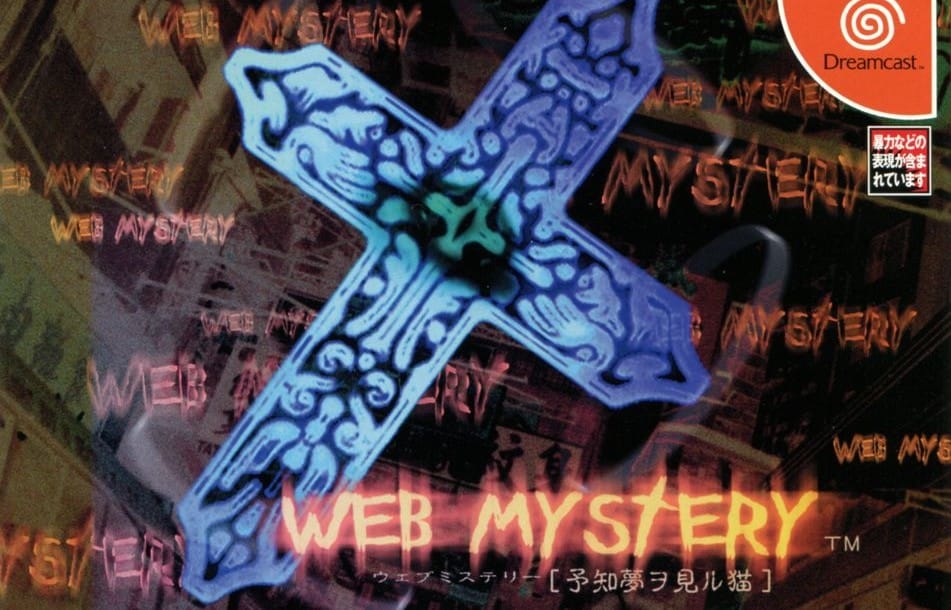
Published in 1999 for the Sega Dreamcast, Web Mystery ~Yochimu wo Miru Neko~ (or for a rough English translation, Web Mystery: A Cat Who Dreams the Future) exists as a game about the internet on the precipice of the new millennium, the dawn of the modern age of the net, back when it was "good". Following a guy named Kei who winds up in a bar-cum-internet cafe where he discovers a website that seems to show the murders of people before they happen, the FMV adventure sits both beside and apart from other Japanese works of internet Y2K paranoia released around the same time.
While Web Mystery certainly gets to a place of interrogating the loss and evolution of the self like fellow prophetic works Serial Experiments Lain, Ace Combat 3 Electrosphere, and The Silver Case, the game feels more deeply interested in the then hardline delineation between the online and offline, supposing the net less as the next stage of consciousness and more as a reflective tool that highlights back our physical world. There's a strong sense of the unknowable, an almost mystic quality to the net, but here, the world wide web still feels like something else, something separate from the rest of life.
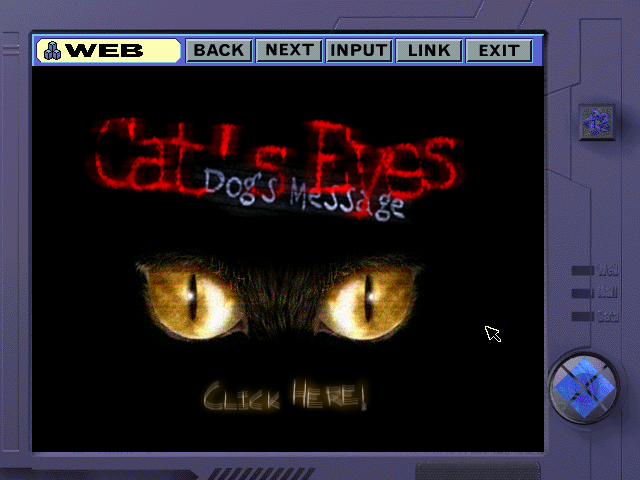
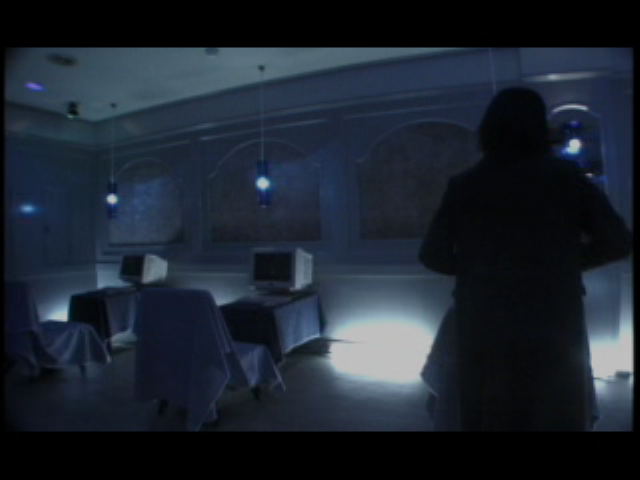
You see it in the bar that serves as the home base for much of the game: the internet here is given a physical location – a small, poorly lit place with a handful of computers in front of weird chairs with white fabric draped over them – treated both as a considered object and an inherently social activity, one literally shared physically with others. When the hero Kei discovers Cat's Eyes, the website that sees the future (and then asks a kindergarten grade "what did you just see quiz" because video games I guess), he's also discovering a community with the staff of the bar. It's thanks to the internet that he's brought out of some traumatically based isolation, but crucially the connections and healing almost entirely happen offline. This all only becomes clearer as the game goes on, internet slowly fading from the plot in favor of a thriller about mafia and pre-cognitive powers. The Early Edition But With Computers set-up is just the spark.
It's a comforting idea in today's world, where people are increasingly attracted to disconnecting, to dumbphones and built-in friction and a demand for conscious decisions in response to unending corporate gamification and enshittification of the net; a world where all websites are now apps scientifically designed to hit dopamine receptors and kill attention spans and in turn encourage everyone to self-propagate the lowest effort copy of copies in the hungry search for likes and retweets. In the face of all that, Web Mystery feels so nostalgic. How great would it be to go to a bar where your friends are and solve a mystery together in the short time you have before your connection to the wider digital world vanishes for the day.
And what an internet Web Mystery provides. Built out of a search engine presenting a series of topics you can select from with sites organized further inside those, the game's faux-web is a treasure trove of retro delights, a seemingly bottomless chest of Geocities wonders spinning out in a thousand directions. Every click is a rabbit hole waiting to fall into, a wonderfully personalized deluge of thoughts and opinions and interests and obsessions of the developers, all rendered through hand-crafted pages of HTML design – repeating backgrounds and funky fonts and image collages a plenty. Some are more involved than others (plenty are the classic internet design of a blank white page with some words thrown in there) and there are some overarching design choices that let you know this is in fact all just part of a game, but each an every site you visit feels personal, feels considered.
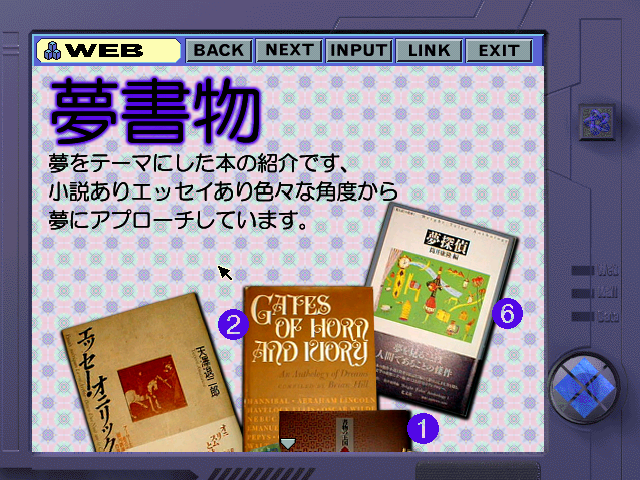
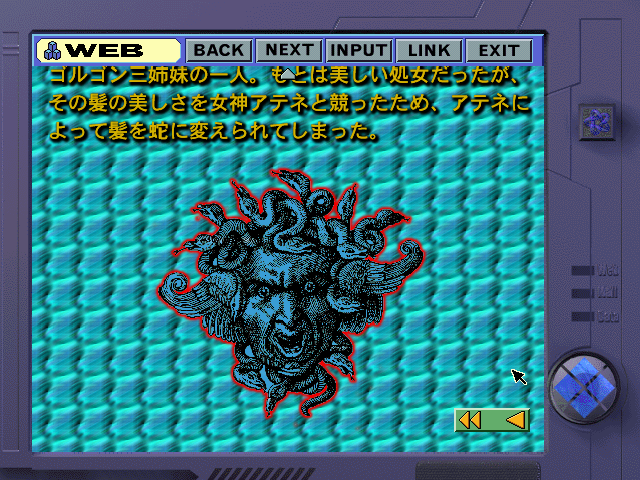
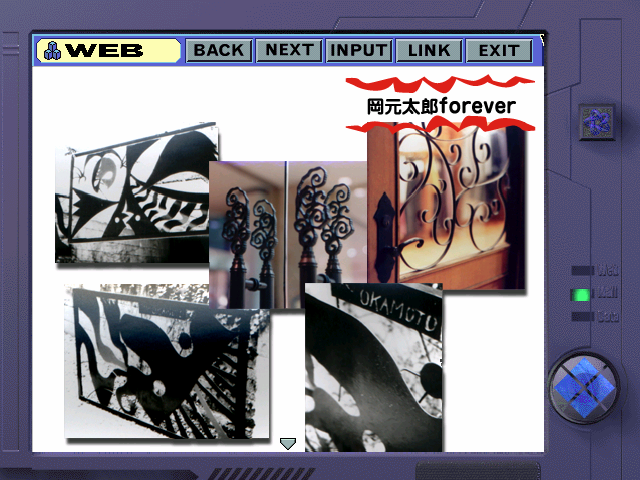
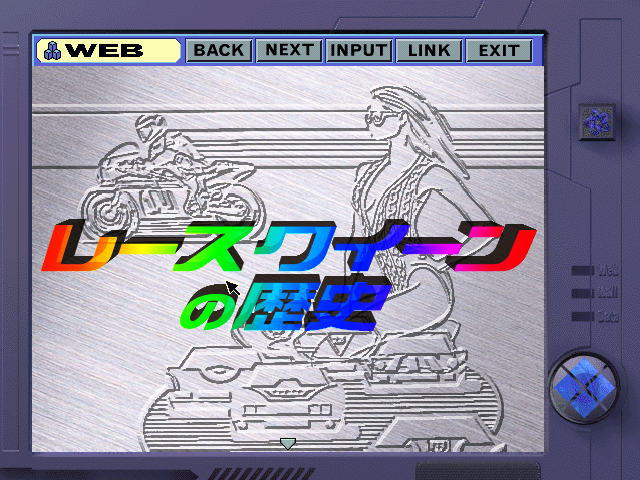
Perhaps most interestingly, this mountain of old-school web goodness is largely unnecessary. Despite the name and despite the premise, nearly all of Web Mystery's interaction with the internet is through email, the rare instances of actually having to Go Online relegated to less than a handful of incredibly simple search engine uses. Instead, the web just sits there, unneeded but waiting, packed with charming asides you never need to see or consider, but which you can if curiosity moves you.
I'm of two minds on this. A large part of me can't help but wish the game interrogated its central premise – so bizarre and wrapped up in a confluence of digital mysticism and snuff crime – more, gave in fully to its own internet. It's hard not to imagine what this could have been, drowned in webpages and information, that perfect mixture of pure data masking the unknowable that defines the online world at its best, particularly in a mechanical sense. As both a narrative and play experience, I think Web Mystery would have sung with a harder focus on the web in its title, if it had demanded a certain amount of sleuthing through dead-ends and unrelated information, and been able to transform itself into a hidden masterpiece instead of a forgotten oddity.
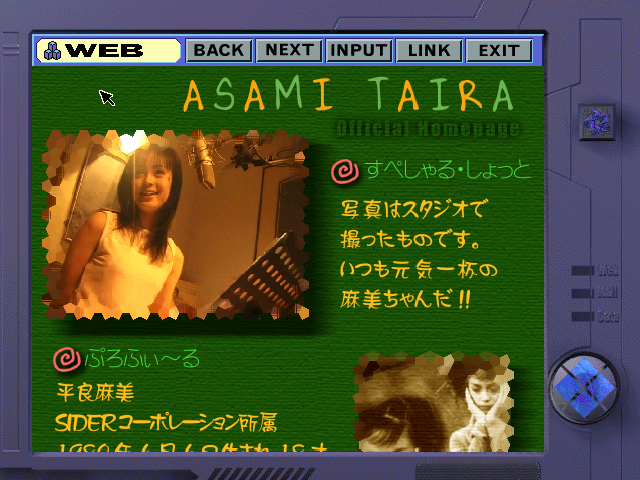
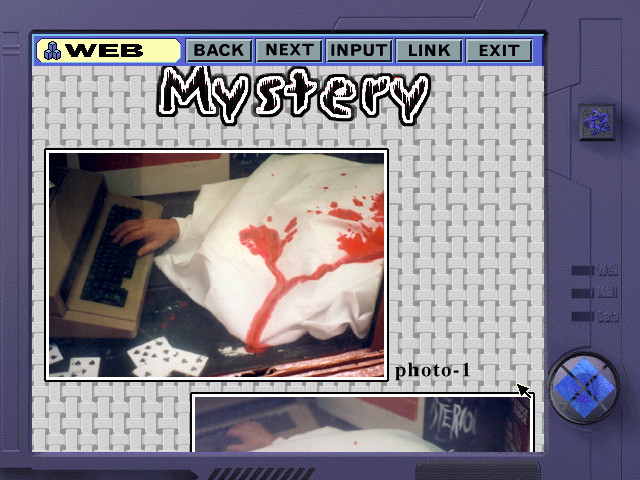
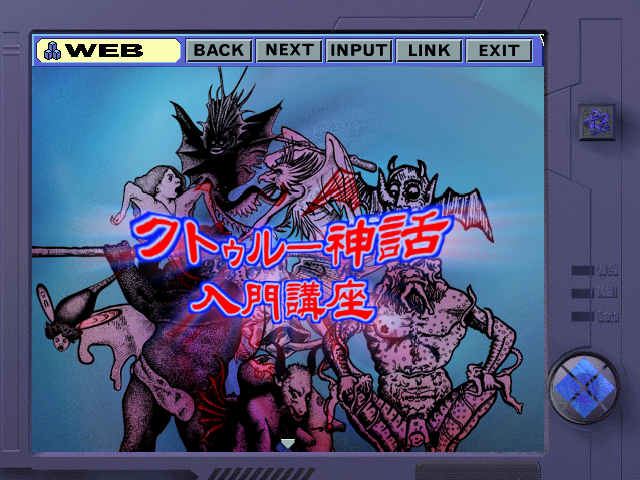
And yet...isn't there something so honest about the way it is, even with today's internet? The web today is an iceberg and near all of humanity lives on its little peak. There is, for most, no reason to go into the water, no reason to ever think about the fact that we stand on more than we see. And that's part of what makes the dive feel so much better. There's something so alluring about just knowing how much is out there, both in game and in life. Even if you never touch an inch of it, it remains, waiting for you.
Just look at my own site here. It's hardly a sterling example of the wonders of the internet what with its default Ghost template, but there's a growing group of people all around me taking the web back; hundreds of gorgeous sites made through hosts like Neocities, displaying unique personalities through HTML code and blogs about whatever might come to mind. Just like what you find in Web Mystery, some of those sites are full, some are empty, some are complex and some are simple, but they all come together to make something more. A, well, web. A series of connections. A world and a home and a community.

Is Web Mystery a total slam dunk? Maybe not. The pacing and editing is constantly jarring, scenes and styles – full-motion video, visual novel reading, and the computer screen – smash cutting with absolutely no warning or sense of rhythm, any second of downtime brutally excised. The sets are profoundly chintzy (a newsroom that's just a completely undisguised storage closet a highlight) and the acting carries about as much elegance as the writing: that is, none at all. But I do think there's also plenty to get out of it.
I find, for instance, the paralleled use of live-action video and invented websites inspired, far more effective than any sprites or polygons could have been, as the narrative play between web and reality finds itself reflected in the game's own visual construction. I think several times said visuals are surprisingly inspired, camera taking as many delightfully staged risks as it does absolute flops. And the way multiple side-stories told through email chains -- a friend abroad, a company planning a trip, someone from the net long ago -- start to coalesce is genuinely pretty exciting. More importantly than any good or bad qualifications though, Web Mystery is a game that offers ideas. Atmosphere. Passion and considerations, however wonky they might all be. What else could you really ask for?

The internet imagined by Web Mystery feels dead today, murdered tortuously slowly in the decades leading to our current age of late-stage social media. But the truth is, of course, that it's not dead, and it never will die. While five sites might dominate and our lives continue to be intertwined with the use of various apps, the reflections of ourselves remain hidden just under the surface. There's an ocean of us made digital flowing and growing and waiting for the unsuspecting, for people like Kei, to fall into a world they never knew.
So please, behold the web in all of its mystery: every word of this last paragraph links to a different bespoke site, many of which from friends and readers of this blog and all of which are almost guaranteed to delight anyone who's made it to the end of this post. There's plenty of games talk to be found, but plenty more beyond that, too! Click around; discover just a little slice of our thriving net!

Music of the Week | China Baby in My Arms: Ryoichi Hattori Songs by Ryota Nakanishi & Miki Yoshida
An '80s take on a group of songs from Ryoichi Hattori, perhaps Japan's most significant war and post-war songwriter who's jazz-tinged pop can still be felt all these years later. Here, the gorgeous earworm melodies are given a slower and spacier area to play, instrumentals retaining the traditional instruments and love of tango but with equally airy use of synths and sighing echoes. Honestly the backing often reminds me of something you'd expect from composer Joe Hisaishi; just this time you get to enjoy beautiful crooning on top. Absolutely adore this album.
Book of the Week | Uroshima Monogatari by Youji Fukuyama
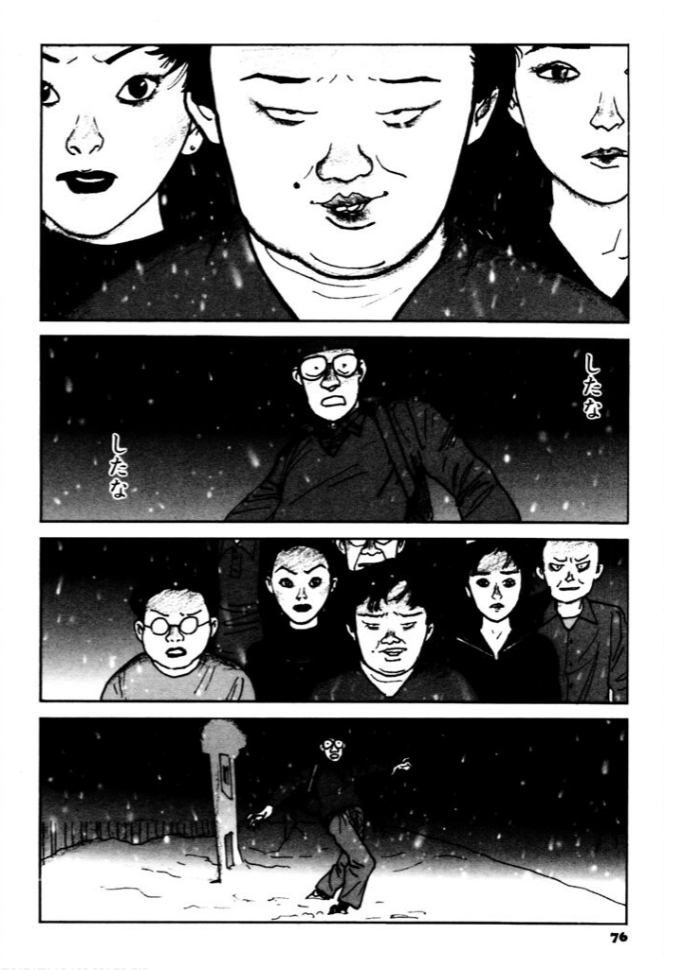

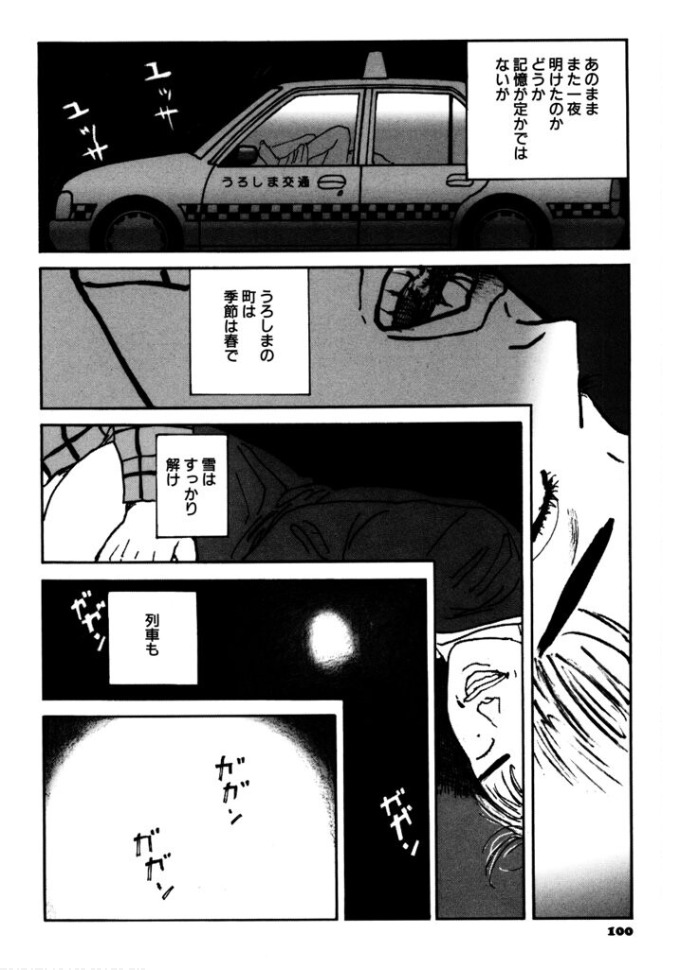
Bit of a struggle to share pages that are safe for work here, but I absolutely love this single volume slice of surreal eroticism. Following a man who falls asleep on a train only to wake up in a town where everybody is constantly having sex with each other, the manga oscillates effortlessly between comedy, intense self-reflection, and nightmarish oddness as its sex gag set-up almost immediately gives way to an escalating farce of self-loathing and desire. Better yet, Youji Fukuyama graces the whole thing with pitch perfect storytelling, stunning paneling, and indelible visual metaphors. Honestly, about the only thing Uroshima Monogatari isn't is actually erotic, as it's just so much more interested in exploiting it all for laughs and reflective considerations. If you're up for a book you can never read in public, this thing is a complete stunner.
Movie of the Week | The Dull Sword (dir. Junichi Kouchi, 1917)
A charming early example of anime where a loser gets his hands on a sword and uses the weapon as this pathetic way to assert his masculinity, overwhelmed with that awful dude desire to kill as a way of proving yourself, trying to off basically anyone he can but because he's a loser he just keeps falling on his ass. Plays very well today for maybe unfortunate societal reasons, but it's also a plain joy to watch, quick and funny and a little wondrous on a technical level.
Have thoughts about anything covered this week? Got a recommendation you’re dying to share? Want to tell me how handsome and cool I am? Leave a comment below!